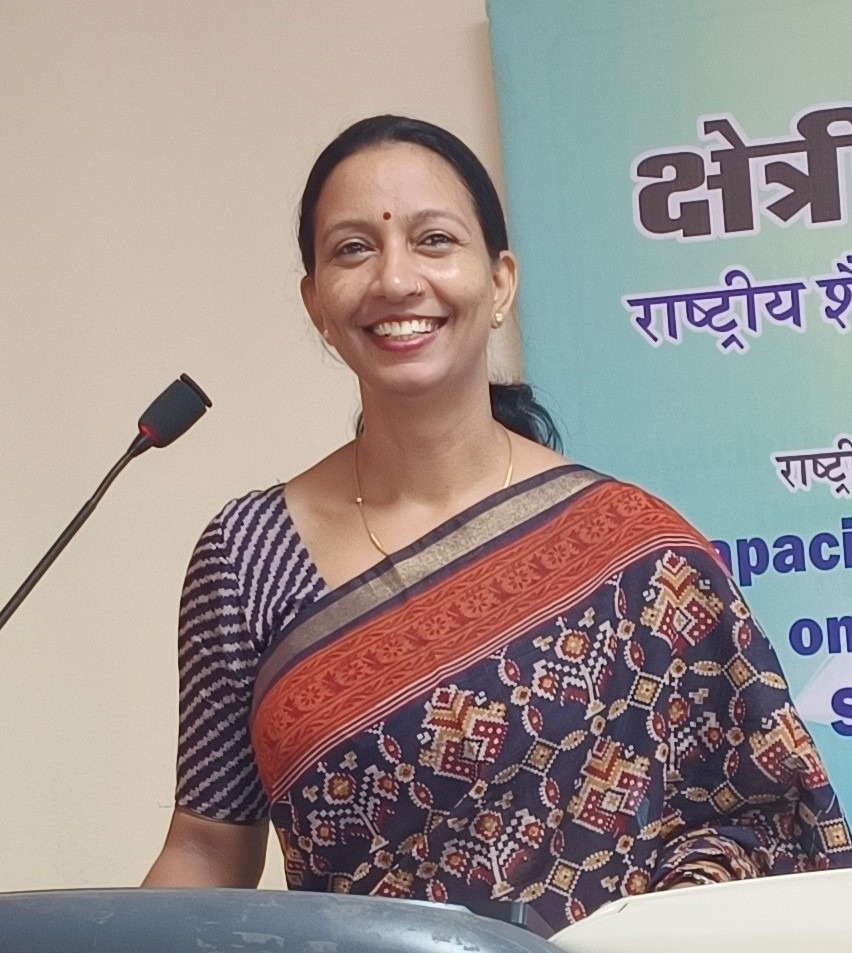
Leadership in a public education system rarely announces itself. It shows up as a person who decides that something in front of them can be improved, and then improves it, with what is already available. Anita Sharma has been doing exactly that for thirty years, first for forty children at a time, now for the entire state. This is the story of how one answered question in grade 7 became a career spent making sure the next child’s question does not go unanswered either.
A mirror, a sheet of paper, three pins
She was in class 7, and one curious question would not leave her alone.
When you stand in front of a mirror, how do you see your own face? Why do left and right swap places? If you eat with your right hand, why does the mirror insist it is your left? She had been collecting questions like this for as long as she could remember. Why does this happen? What is the logic behind it? Every answer she got produced more of them.
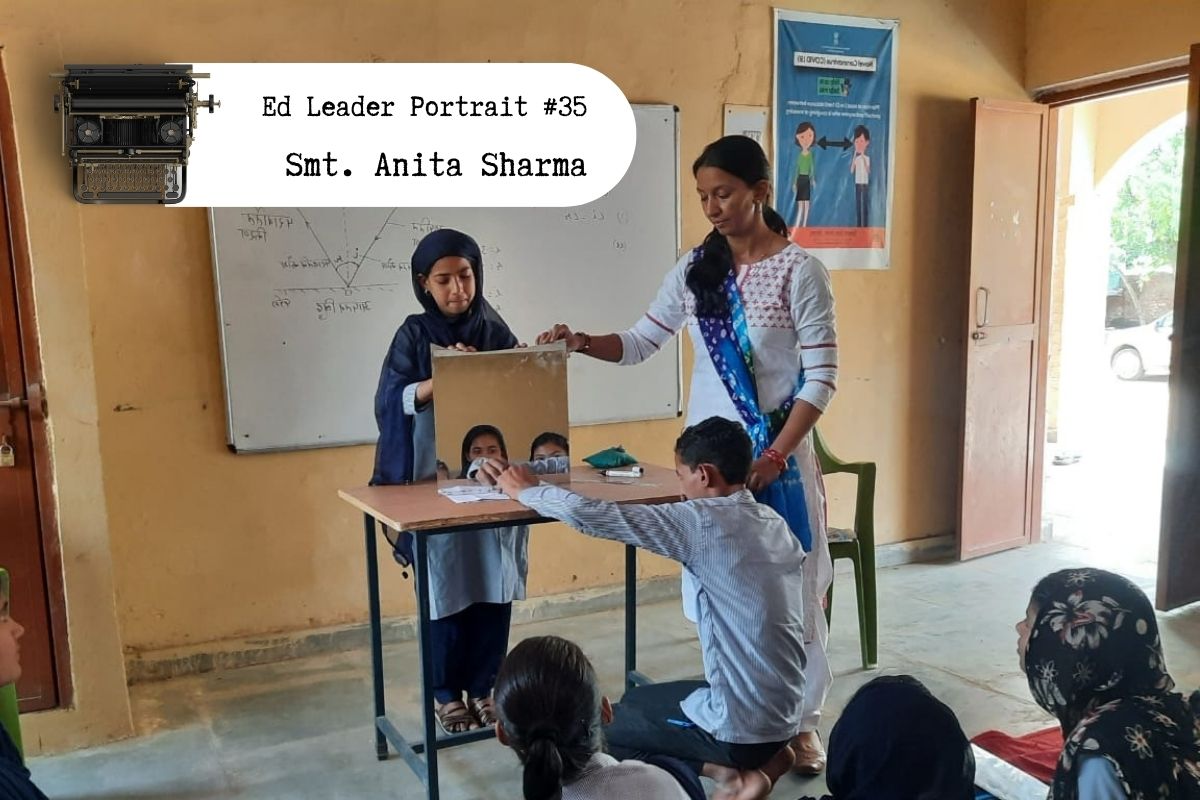
Then Shri Virendra Chaubey (her teacher) took the class into the lab. He set up a mirror, laid a sheet of paper down, placed three pins on it, and showed them how light strikes a surface, how it returns, how an image is formed. That was the whole apparatus. A mirror, some paper, three pins.
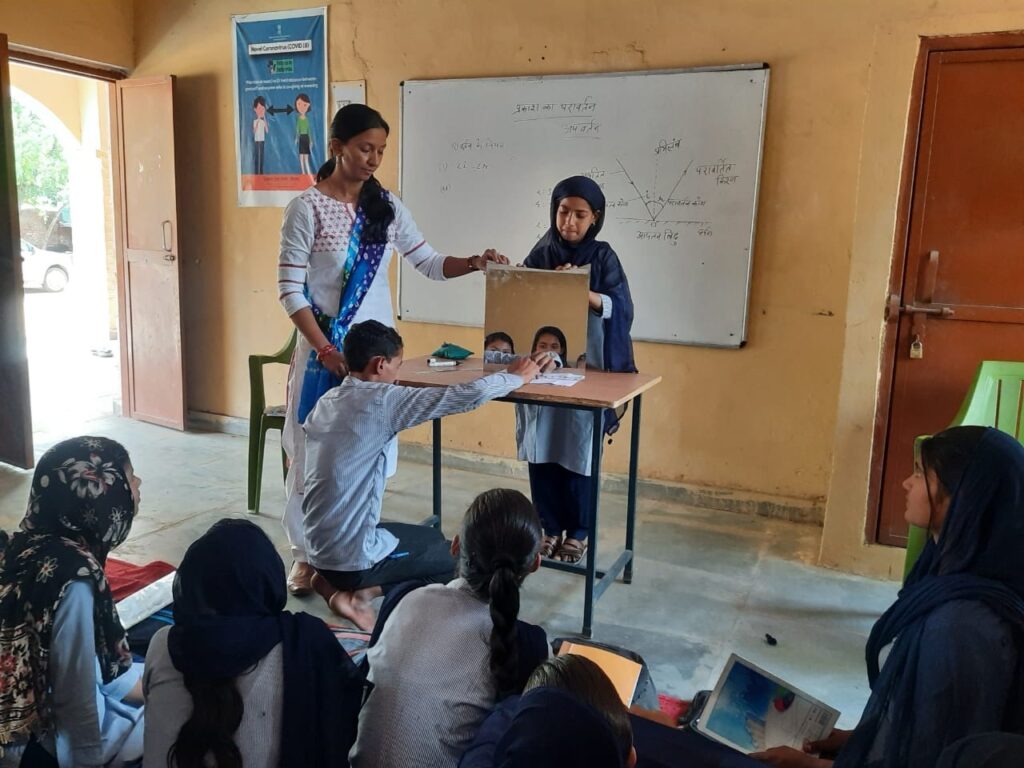
“I still remember feeling so happy that day,” she says, decades later. “Finally, I understand how mirrors show our reflection.” Her school teachers, she says, played a huge role in leaning her interest towards science, and this was the day it tipped. “When curiosity gets answered like that, interest naturally builds up.”
Nothing about that afternoon required a budget, a sanction, or a circular. One teacher decided a question deserved an answer and used what the room already held. It is the smallest possible unit of leadership, and it set the shape of everything she has built since.
Six schools, two districts, fifteen years
The second turn came in a B.Ed classroom, in a six-minute micro-teaching lesson in front of fellow students. Standing on the other side of the question for the first time, she found something she had not expected. The children in front of her had more questions than she had ever had, and most of them would stay unanswered if nobody nourished them. That was the moment teaching stopped being a job she might take and became a thing she wanted to do.
She then spent fifteen years doing it, across six government schools in two districts. Government Senior Secondary School Mahendergarh, GMS Jasawas, Model Sanskriti Senior Secondary School Mahendergarh. Then Mewat: GGMS Rathiwas, GSSS Nizampur, GSSS Rathiwas in Nuh. She began as a Science Mistress and left as a PGT Physics lecturer.
There were rooms in which she was often one of very few women. She is clear-eyed about that and refuses to make it THE STORY. “There have been several situations in my career where women were fewer in number, especially in Physics and technology-related discussions,” she says. “But I never saw this as a limitation. I have always believed that our identity in a room should not be defined by whether we are a woman or a man. We should be known for our work, knowledge, commitment, and contribution.”
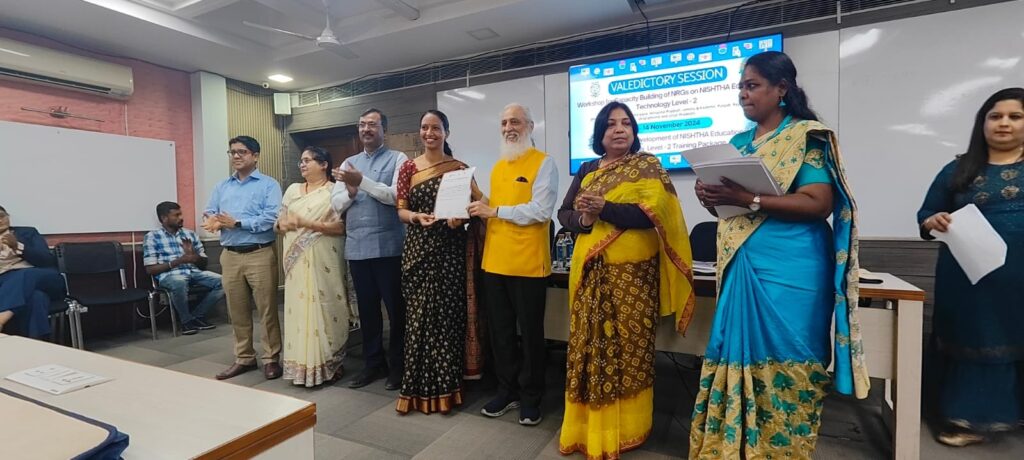
Somewhere in those fifteen years she also revised her idea of what a teacher owes a child. The girl who had needed an adult with an answer became an adult who no longer thinks the answer is the point. “I don’t think a teacher has to know every answer. A good teacher should know how to find the right answer and how to learn along with students.”
That sentence is where a teacher becomes a leader. It moves the job from having authority to building capability, in herself and in the children in front of her.
From a state office, you do not see one classroom
When departmental recruitment opened, she applied, and moved to SCERT Haryana. She still misses the room she left. “I miss the energy of the classroom,” she says, “but now I have the opportunity to support many classrooms across Haryana.”
From here you see the machinery rather than the child. A teacher returns from five days of training with sharper methods, and her students visibly learn more. “Even well-qualified teachers need periodic training and academic upgradation,” she says. It is the conviction she started with, moved up a level. If a teacher is what changes a child, the way to reach many children is to keep giving teachers something worth carrying back.
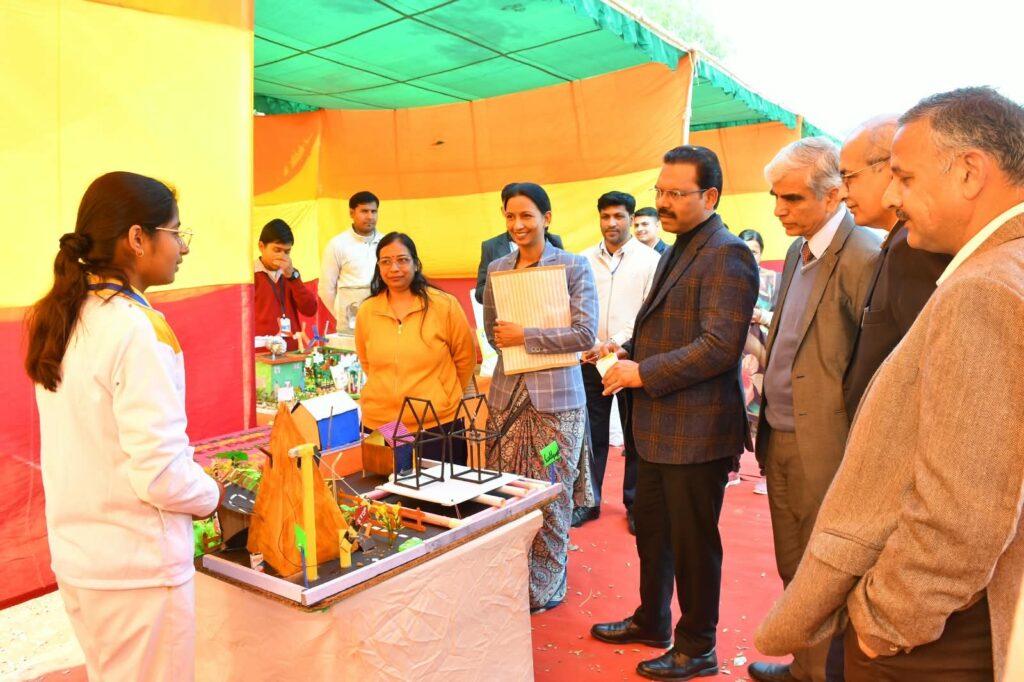
Her designation says Subject Specialist in Physics. Her work is educational technology across the department, and every month she checks whether what leaves it has actually reached a child.
Curiosity that costs nothing
Ask her why children fear science, and she does not accept the premise. “Every child is naturally curious and wants to know why things happen, and science provides those answers. Science feels difficult only when children lack opportunities to explore and find those answers.”
That is her own childhood, converted into a design brief. STEAM Manch, which she has helped run across Haryana for three years, gives students what she got in that lab: a real problem to identify, explore, and build something for. Four cycles, 5,948 student projects, made from everyday household materials so that no child has to spend money to take part and no teacher has to wait for a lab or a kit to begin. It is the class 7 lab again, scaled.
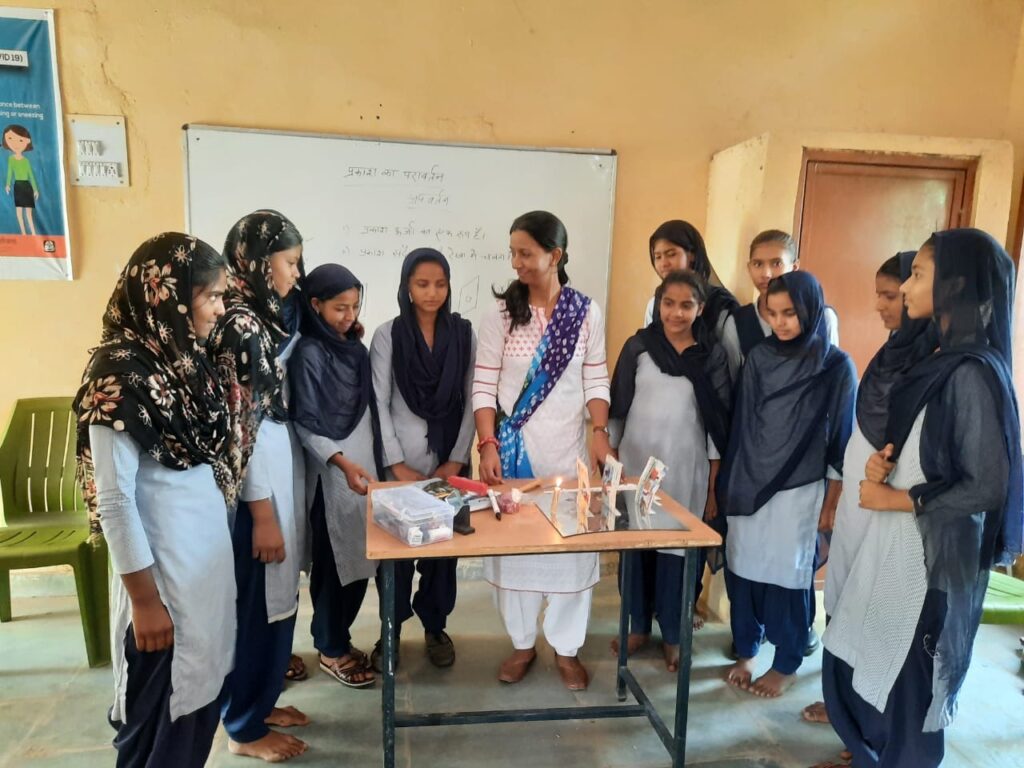
Not all of it lands the way it was drawn. “Instead of focusing only on the problem, I ask myself: what can we improve?” The team takes feedback, looks at the data, and rebuilds. “Sometimes small changes gradually lead to bigger results.”
The only measure that counts
What she believes about how a child learns science, she applies to how a teacher learns to teach it. If curiosity is answered by doing, training cannot be a lecture. Teachers build the lesson plans themselves, run the activities with their own hands, and go back holding something they can start on Monday morning without asking anyone’s permission
Her proof is not an attendance sheet. “The success of training should not be measured only by how many teachers were trained,” she says, “but by what changed after the training.” What changed shows up as one sentence she has now heard more than once.
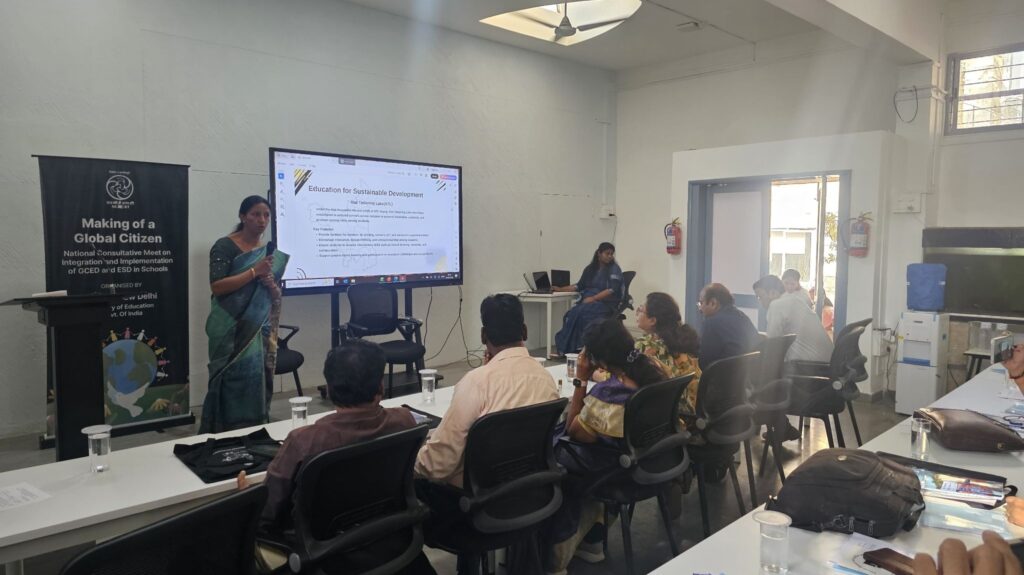
“Ma’am, earlier I used to only explain the concept, but now I involve students in activities.”
Which is why she still goes to see the classrooms. What she looks for there is children asking, discussing, exploring. A class 7 girl with a question, and an adult who does not let it go unanswered.
“Teaching is not merely a profession,” she says. “It is a powerful platform for nation-building, placed directly in a teacher’s hands. We aren’t just imparting textbook knowledge. Our goal is to build resilient, confident and better human beings for life.”
Thirty years ago a teacher answered one girl’s question with three pins and a mirror. She has spent a career making that afternoon repeatable, for children she will never meet, in classrooms she will never stand in.


 Link copied to clipboard!