Who He Is
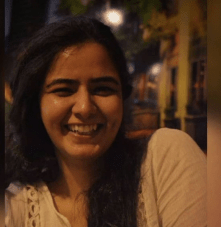
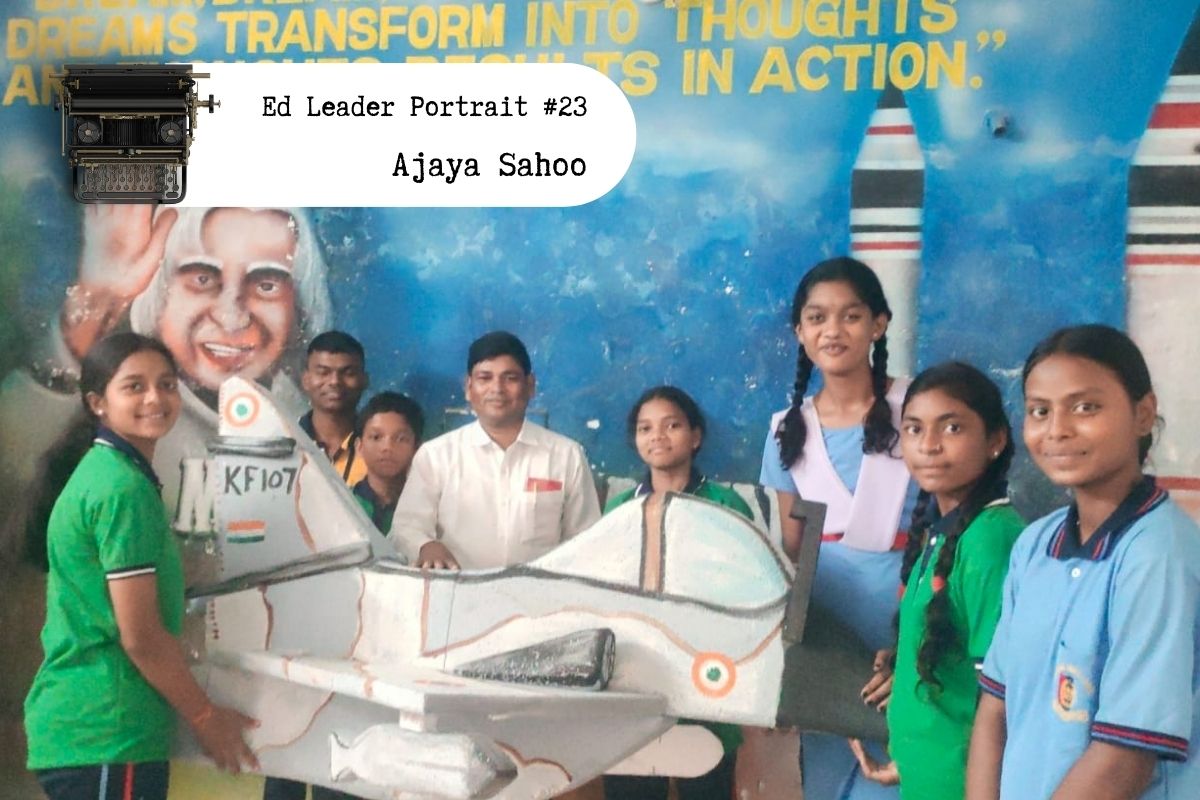
Ajaya Sahoo, Senior Teacher at PM SHRI Government High School, Kesinga, Kalahandi, has dedicated over two decades to nurturing young minds in rural Odisha. Starting his teaching career in 2004, he joined Government High School, Madiguda in 2013, where he started working closely with tribal and marginalised Communities.
Hailing from a modest background, Ajaya understands the challenges that first-generation learners face—limited access to resources, lack of exposure, and low parental literacy. His students are no different. They come mostly from Scheduled Tribe (ST), Scheduled Caste (SC), and Below Poverty Line (BPL) families and often juggle school with agricultural or domestic responsibilities.
In addition to teaching, Mr. Sahoo is deeply involved in community initiatives such as plantation drives, cleanliness campaigns, and student-led social work. These efforts have strengthened community awareness around health, hygiene, and environmental care. Parents who once remained disengaged now actively participate in school activities, while children grow up in cleaner, greener surroundings. His holistic approach to education blends academic excellence with values of service, sustainability, and scientific thinking—making him both a teacher and a changemaker in the truest sense.
The Problem He Saw
When Mr. Sahoo was posted in the tribal belt of Kalahandi, he observed several interlinked challenges hindering students’ learning. Many children grew up in environments shaped by myths and superstitions that discouraged scientific inquiry. Parents prioritised labour and agriculture over education, leading to poor attendance and high dropout rates—especially during harvest and migration seasons.
Students viewed Science and Mathematics as difficult and disconnected from their daily lives. With limited access to teaching aids, laboratories, and hands-on learning, abstract concepts became intimidating. Teachers, too, struggled to make these subjects engaging in low-resource settings.
These realities created a cycle of disinterest and underachievement, where students lacked not only resources but also belief in their own potential.
The Micro-Improvement Journey
Mr. Sahoo believed in the power of taking small, consistent steps. He began implementing simple yet thoughtful changes, which over time transformed both mindsets and learning experiences.
- Community awareness and mobilisation: He conducted door-to-door visits to counsel parents on the importance of regular schooling. His consistent engagement gradually built trust, improving attendance and reducing dropout rates.
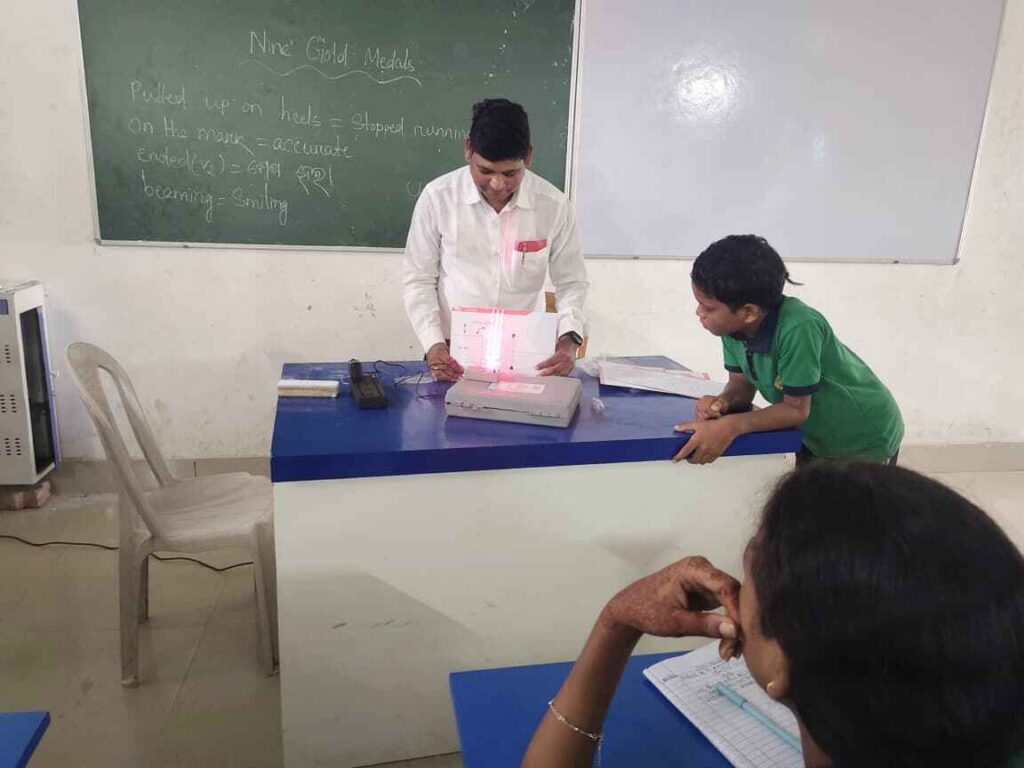
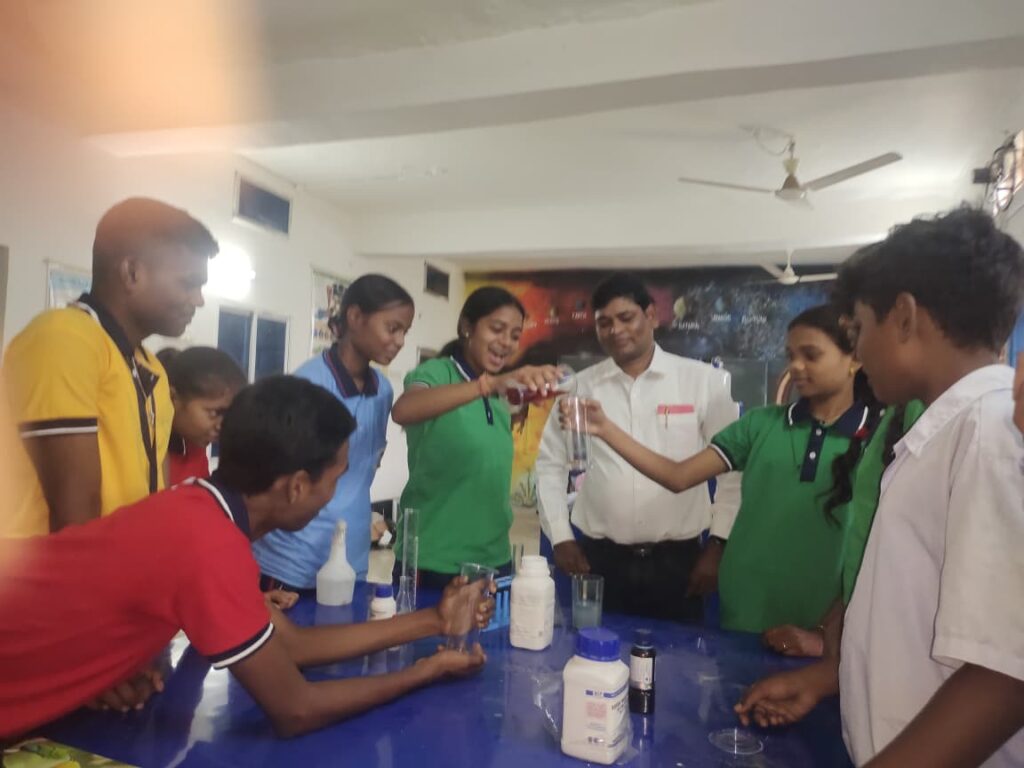
- Making scientific inquiry a culture: He introduced science fairs, exhibitions, quizzes, and “Science Behind Miracles” sessions that encouraged students to question, explore and reason
- STEM Clubs and TLM Corners: With guidance from Odisha Rising Foundation (ORF), he helped establish STEM clubs and Teaching-Learning Material (TLM) corners, promoting creativity and experimentation.
- Peers’ Capacity Building: As a Master Resource Person (MRP) for Mathematics since 2017, he has trained teachers across Kalahand,i ensuring that innovative pedagogy spreads beyond his classroom.
- Student Mentorship: He mentored high-performing students under the PRAKASH 2024–2025 programme (for support for children with learning gaps), preparing them for state and national-level academic recognition.
Role of Civil Society & Support Systems
ORF provided Ajaya with the institutional and intellectual support needed to translate ideas into action. ORF’s structured approach to micro-improvement projects (MIPs)—focusing on STEM clubs, teacher capacity building, and community engagement—enabled him to align his school-level efforts with district priorities.
Through training workshops at District Institute of Education and Training Bhawanipatna and collaborative sessions with peer educators, Ajaya co-created localised STEM strategies and curriculum innovations. This partnership ensured that his work was not an isolated act of leadership but part of a sustained, system-level movement towards quality learning in Kalahandi’s public schools.
Why He Went Beyond
Having grown up in the same landscape of limited resources and aspirations, he firsthand experienced the power of education to transform lives. This personal connection fuels his unwavering commitment to ensure that no child in rural Kalahandi feels excluded from opportunity because of their background.
He believes that “education must awaken curiosity and conscience at the same time.” His motivation stems from seeing his students think critically, challenge blind beliefs, and take pride in their learning. For him, every lesson is a step toward building a rational, confident, and compassionate generation.
Impact His Work Is Creating
Ajaya’s efforts have transformed classrooms in Kalahandi into spaces of curiosity and hands-on learning. Students who once struggled with Science and Mathematics now actively participate in experiments and projects. Over 25 students have represented the school across different competition tiers: 2 at the national, 5 at the state, 8 at the district, and 11 at the block level.
Attendance has improved, dropouts have decreased, and several students have received recognition at district and state-level competitions, boosting confidence and visibility. His work has also inspired other teachers to adopt experiential teaching methods, while parents and the community have become more engaged in supporting the school.
His initiatives demonstrate that dedicated educators can empower both students and communities, creating lasting educational change. He envisions expanding hands-on science learning to all blocks of Kalahandi—ensuring that every learner discovers the joy of learning by doing.

His Words
“Education must go beyond textbooks. It should nurture curiosity, courage, and compassion. My dream is to see every rural child in Kalahandi holding a microscope with the same pride as holding a plough—because both are tools of creation. Through STEM learning, we can build not only skilled individuals but also thoughtful citizens.”
Many leaders like Ajaya Sahoo are enabled to lead change under the Shikshagraha movement – a collaborative effort between Samaaj, Sarkaar, Bazaar and Sanchaar actors. In the Kalahandi district, the actors include the District Education Department as the government partner. The CSR collaborator is Axis Bank, the district implementation partner is Odisha Rising Foundation, and the program partner is Mantra4Change.
This story is part of ‘Small Steps to Build Great Schools’ Vol II- a Coffee-table Book celebrating the leaders who go beyond their roles to make education inclusive, joyful, and rooted in belonging, for children in India.
🔗 Read more such stories of transformation here: https://heyzine.com/flip-book/9ab883d082.html


 Link copied to clipboard!