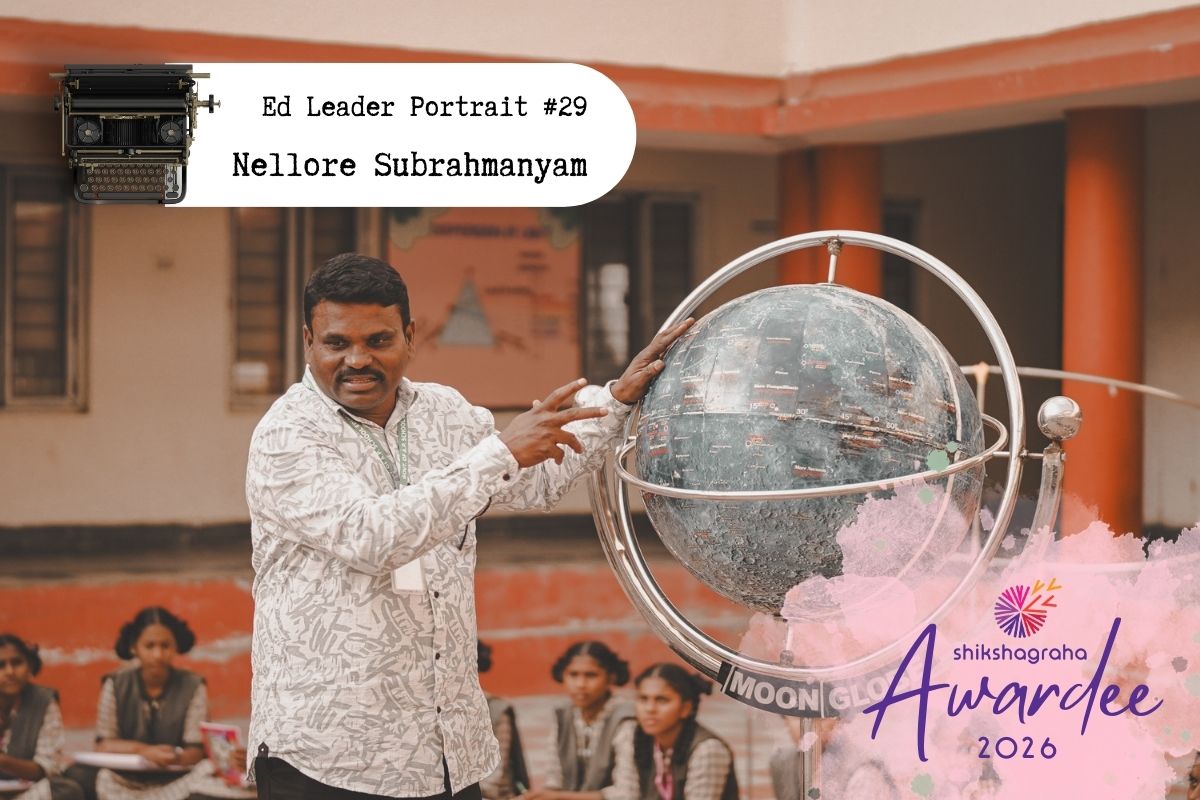
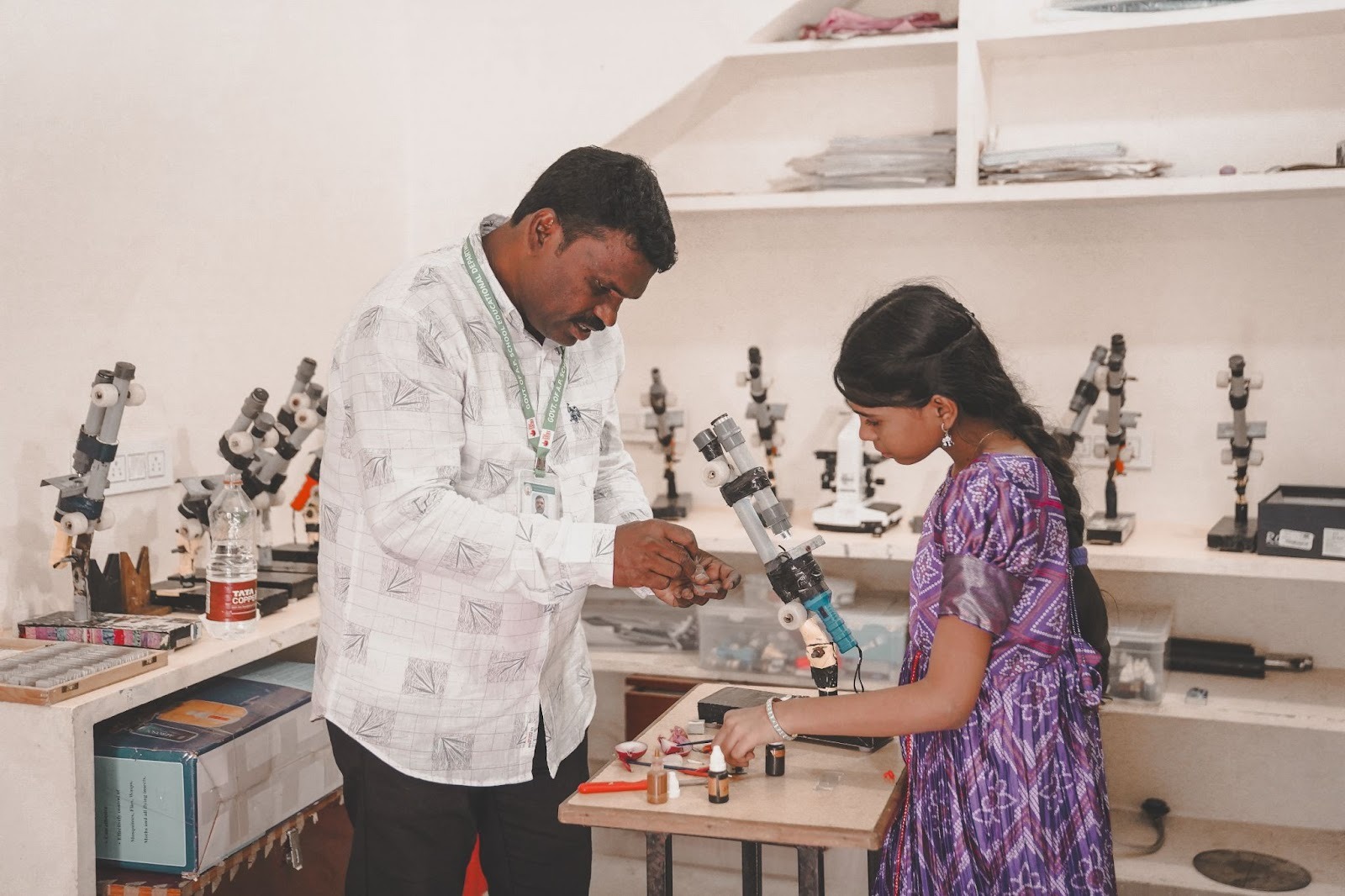
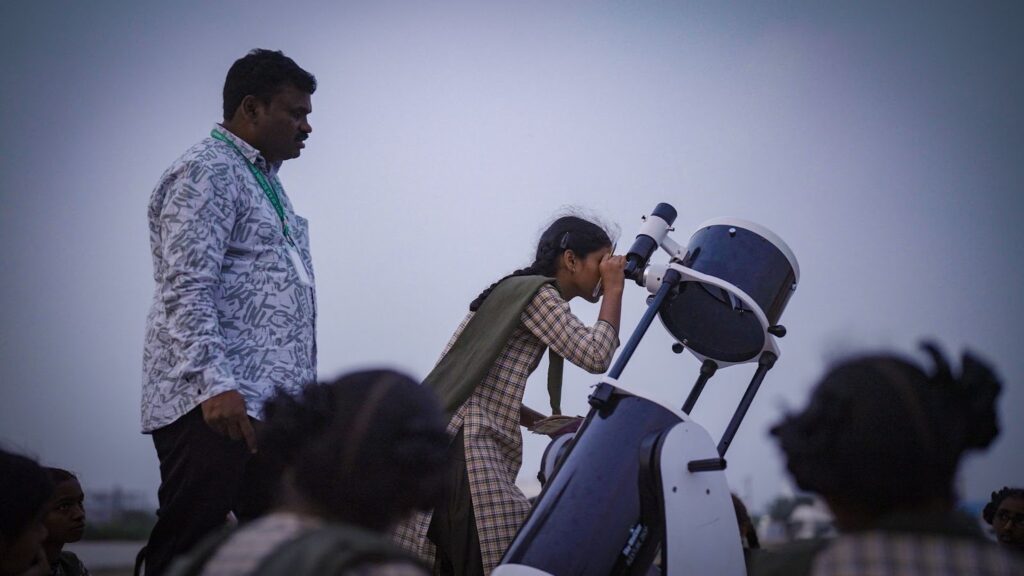
In a village school in Nellore, a group of students peer through a telescope they built themselves, gasping as lunar craters and mountains come into focus for the first time. Nearby, another class examines slides they prepared under microscopes they constructed with 1000x magnification. In the courtyard, students document butterfly species in their self-maintained nature garden while others test soil samples and prepare biofertilisers using Azospirillum and Rhizobium (beneficial soil bacteria used as biofertilisers). This is not an elite science academy—this is the everyday reality that Nellori Subrahmanyam has built across rural Andhra Pradesh over 28 years.
Coming from a humble tribal family along canal banks, he experienced firsthand how India’s exam-oriented education system fails rural children. Textbook memorisation and question-answer patterns ignored what rural students naturally excel at: sensorimotor skills, observation, and hands-on learning rooted in their daily interactions with the environment. Where others saw inevitable dropouts and disengagement, Subrahmanyam saw untapped potential. He pioneered a complete transformation of rural science education—establishing the “Rural Children Research Center” equipped with advanced instruments and creating “Science on Wheels” mobile labs that bring experiments to remote villages. He has launched the “Astro-Tourism Program” that has given 55,000 students practical astronomy experience, and developed constructivist methods (learning by doing) where students don’t just read about science but build microscopes, conduct field research, create mathematical models, and present their findings.
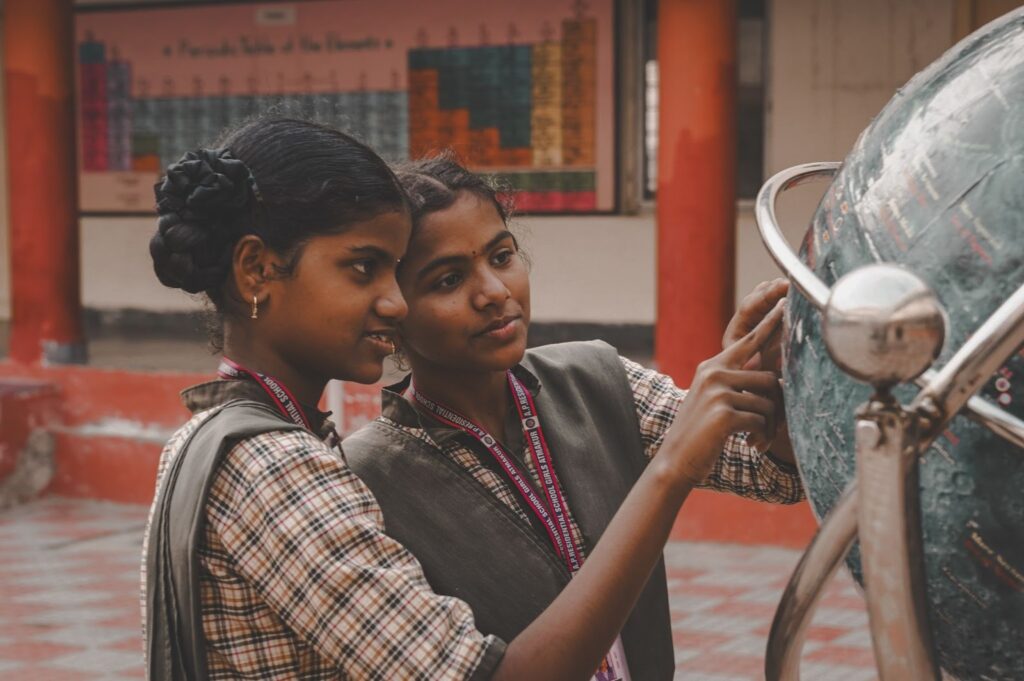
His students have gained national recognition: one developed a Soil Health Card, another built a low-cost rotating globe, others conducted butterfly research and fabricated astronomical models inspired by Jaipur’s Jantar Mantar. What makes Subrahmanyam’s work particularly effective is his understanding that rural children’s natural learning style—rooted in observation, physical activity, and direct experience—is not a disadvantage to overcome but a strength to harness. In his hands, science education becomes what it should always be: a tool for curiosity, discovery, and empowerment.
Why His Micro-improvements Matter
The Crisis in Rural Science Education:
- India’s education system emphasises rote learning and exam performance as the sole indicator of achievement, over critical thinking, creativity, and practical skills, particularly disadvantaged rural students.
- Inadequate teacher training and limited access to effective pedagogical methods perpetuate memorisation-focused instruction that disconnects students from meaningful learning.
- Traditional textbook-based instruction ignores rural children’s natural strengths: strong sensorimotor skills, observational abilities, and learning through direct environmental interaction.
- The mismatch between urban-designed curricula and rural learning styles leads to widespread disengagement, learning difficulties, and dropout rates.
- Science labs in rural schools, when they exist, often contain unused equipment and focus on demonstrations rather than student-led experimentation.
- Rural students rarely access advanced scientific instruments, field research opportunities, or mentorship that could nurture scientific thinking and innovation.
What He Observed:
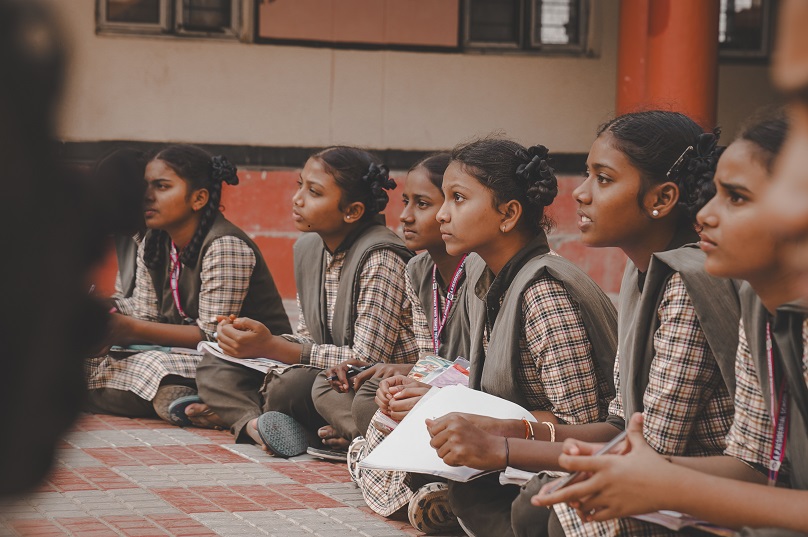
From his own rural schooling experience in Nellore, he recognised that rural children naturally learn through observation, physical activity, and hands-on engagement—much like agricultural practices where skills develop through repeated practice and experimentation. He witnessed how imposing rote-based methods on these naturally observant, physically engaged learners creates failure rather than success. He saw textbook science failing to spark curiosity while students’ daily interactions with soil, weather, plants, and animals went unexplored. He understood that without fundamentally reimagining how science is taught in rural contexts, generations of potential scientists, researchers, and critical thinkers would be lost to an incompatible educational approach.
Micro-improvements Initiated by Him
- Guided students in building 1000x magnification microscopes, preparing slides, and exploring microscopic worlds independently.
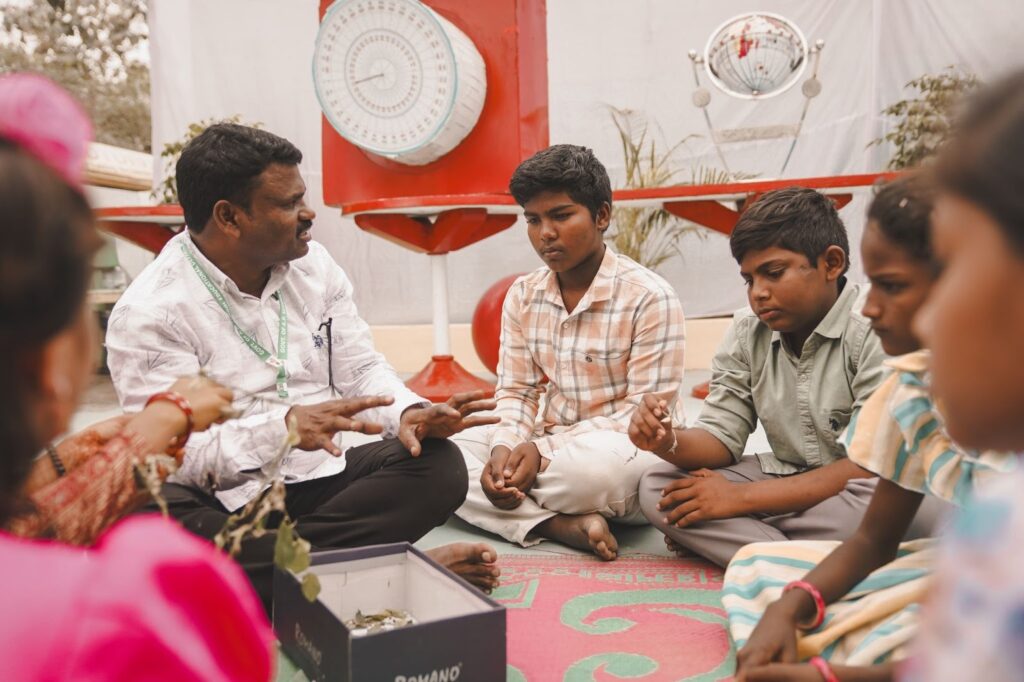
- Implemented project-based learning – students surveyed fertiliser use, tested soil samples, and prepared biofertilisers using Azospirillum and Rhizobium.
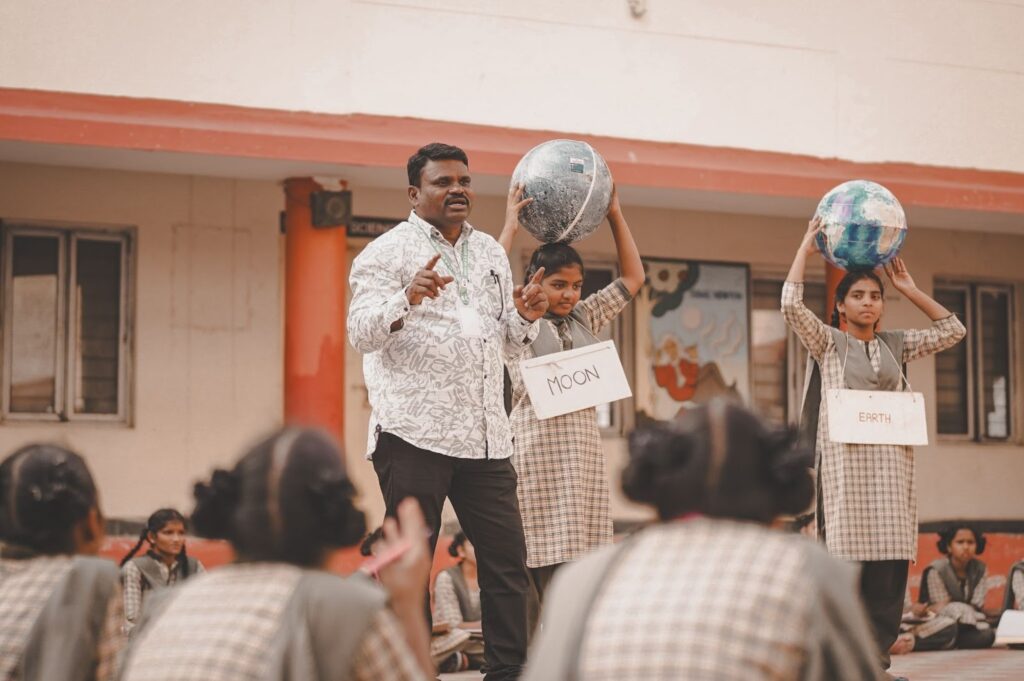
- Created astronomical observatory and mathematical models where students studied Jantar Mantar instruments and constructed models demonstrating retrograde motion, eclipses, and seasonal changes.
- Established astronomy learning and telescope use activities using 10-inch professional telescopes, interactive Moon–Earth and globe models, and activity sheets on lunar phases and celestial mechanics.
- Launched Butterfly Nature Project developing ecological awareness through species documentation and host plant studies.
- Designed large-scale learning materials and interactive posters (40*48 inches) for concept visualisation, recognised by IIT Tirupati.
- Established Rural Children Research Center equipped with microscopes, advanced telescope, comprehensive library, and research facilities.
- Created Science on Wheels mobile lab bringing interactive exhibits, butterfly garden, weather station, and mini observatory to remote village schools.
- Developed Astro-Tourism Program: Astronomy for All with daytime workshops on ancient Indian astronomy, Jantar Mantar models, celestial navigation, sundial experiments, plus night sky observations and telescope training.
- Implemented Budding Scientist Program guiding 8th–9th graders through hypothesis building, observing biogeochemical cycles, field visits, and project creation.
- Launched Cosmos Digital Learning Series with bilingual astronomy content, personalised kits, and critical thinking exercises.
- Designed Constructivist Classroom Learning Modules with low-cost STEM kits, mini science fairs, collaborative experiments, and interactive games aligned with NEP 2020.
Impact: 28 years of sustained, transformative work (1997–2025)
- Scientific literacy advanced: Instilled scientific temper in rural communities through accessible astronomy, ecology, and research experiences. 25,000+ students observed lunar mountains, craters, and seas; thousands of students reached through Science on Wheels mobile lab across remote villages in Andhra Pradesh; 500+ rural students annually benefit from the Budding Scientist Program.
- 21st-century skills nurtured: Cultivated creativity, collaboration, problem-solving, and independent scientific thinking.
- National recognition for student innovations: Supported students in Soil Health Card development, low-cost rotating globe creation, research on butterflies, Kanigiri Reservoir study, compound microscope fabrication, and astronomical model building inspired by Jantar Mantar.
- Learning outcomes shift: Enhanced conceptual clarity, scientific reasoning, critical thinking, and ability to apply knowledge practically; increased student confidence and curiosity through field studies, data collection, and research report writing.
- Pedagogical shift: Spearheaded transformation from memorisation to experimentation, from passive learning to active inquiry, from exam focus to genuine understanding.
- Teacher capacity: Strengthened through demonstration of constructivist methods that thousands of educators can replicate.
A Voice of Belief
“What makes Subrahmanyam’s work truly exceptional is how he reimagined science education for rural contexts—from memorisation to discovery. Drawing on his own tribal roots, he recognised rural children’s observational and hands-on skills as strengths, not deficits. By encouraging students to build their own scientific tools, conduct local field research, and study their own ecosystems, he nurtured genuine scientific thinking. Through his initiatives, he hasn’t just demonstrated science—he has trained young scientists. Over 28 years, he has shown that when education respects lived experience, students from rural areas often surpass expectations in demonstrating creativity and applying curiosity.” – Bodda Srinivasa Rao, State Project Director, Samagra Shiksha, Andhra Pradesh
🔴 Watch Nellore Subrahmanyam’s journey on YouTube and witness how rural classrooms are turning into laboratories of curiosity and discovery: https://www.youtube.com/watch?v=-CNadzvSnqE
This story is a part of “Small Steps to Build Great Schools – Volume III: Stories from the Shikshagraha Awards 2026” — a coffee table book celebrating the journeys of our awardees and nominees who have transformed schools into living libraries, bridged healthcare and education gaps, and created spaces where students can learn with dignity and hope.
🔗 Read the other stories featured in this coffee table book here: https://heyzine.com/flip-book/0122ff69ba.html#page/1


 Link copied to clipboard!