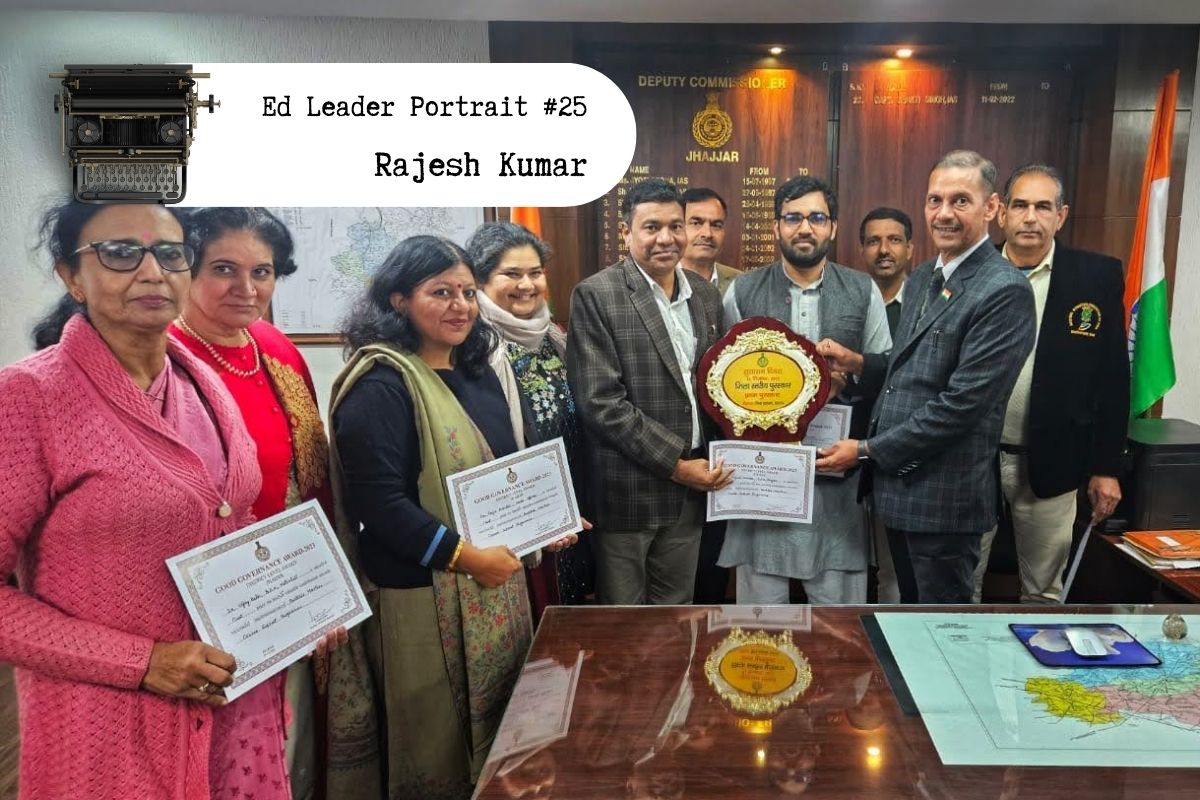
Who He Is
Born into a humble family in Jhajjar, Haryana, Rajesh Kumar completed his early education at a government school in the same district. From a young age, he was deeply committed to learning, even though he often felt uncertain about his future career path. Watching his parents work tirelessly to make ends meet, he was motivated to study harder and build a life of dignity and service.
Rajesh credits his grandfather as his greatest inspiration — the one who taught him that life’s true purpose lies not only in personal growth but also in helping others rise. Guided by this belief, he chose the field of education and became the first teacher in his family.
Over the years, he grew steadily within the system with a strong belief in the power of mentorship, holding roles that reflected both competence and compassion — first as a Teacher, then as a Principal, a Block Education Officer (BEO), and later as Principal of the District Institute of Education & Training (DIET). Each role deepened his understanding of schools, teachers, and students, shaping him into a leader grounded in empathy, discipline and practical experience.
Today, as the District Education Officer (DEO) of Jhajjar, Rajesh oversees academic planning, teacher professional development, programme implementation, and school administration across the district. His role places him at the heart of systemic change, ensuring that principals, teachers, and students receive the guidance, clarity, and support they need to learn, grow, and thrive. His family, inspired by his journey, now has many members working in the education sector, carrying forward his legacy of service.
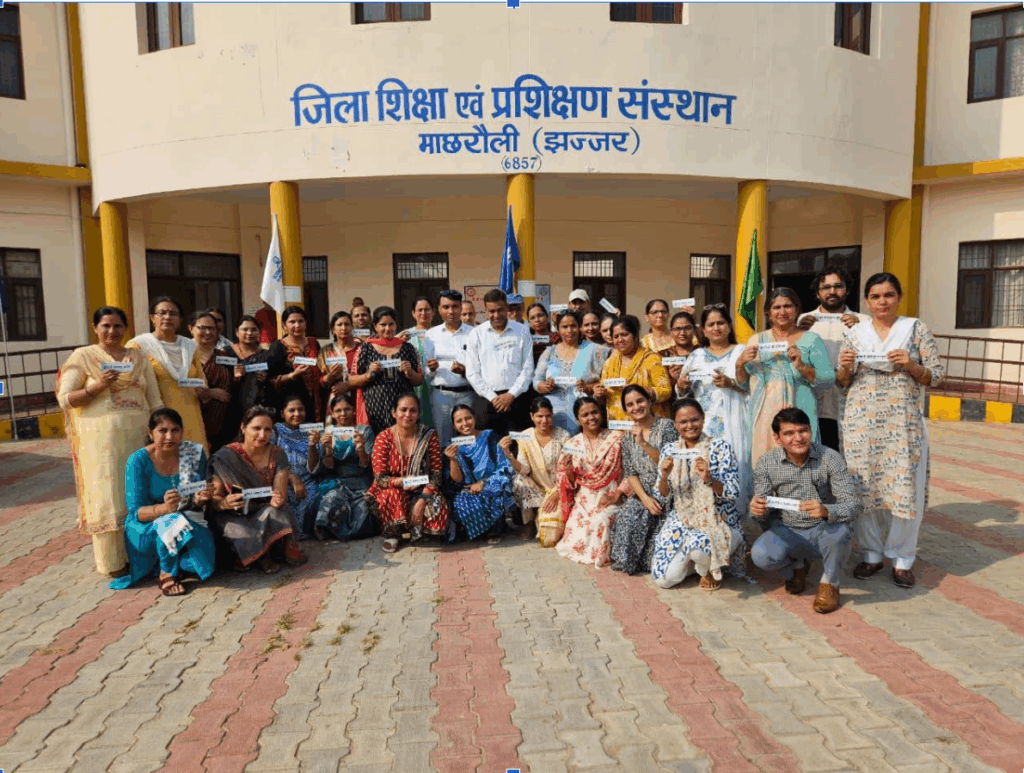
The Problem He Saw
When Rajesh took charge as Jhajjar’s DEO, the district’s secondary students were facing a silent but significant challenge: career confusion. Most students in government schools had limited exposure to career opportunities, college pathways, and skill-based professions. A baseline survey revealed that more than 80% of students lacked clarity about which subjects to choose after Grade 10 or which careers to pursue after Grade 12.
Teachers, too, struggled with this responsibility, often viewing it as an add-on activity rather than an essential part of education. This resulted in inconsistent guidance, leaving students adrift at a crucial stage of decision-making.
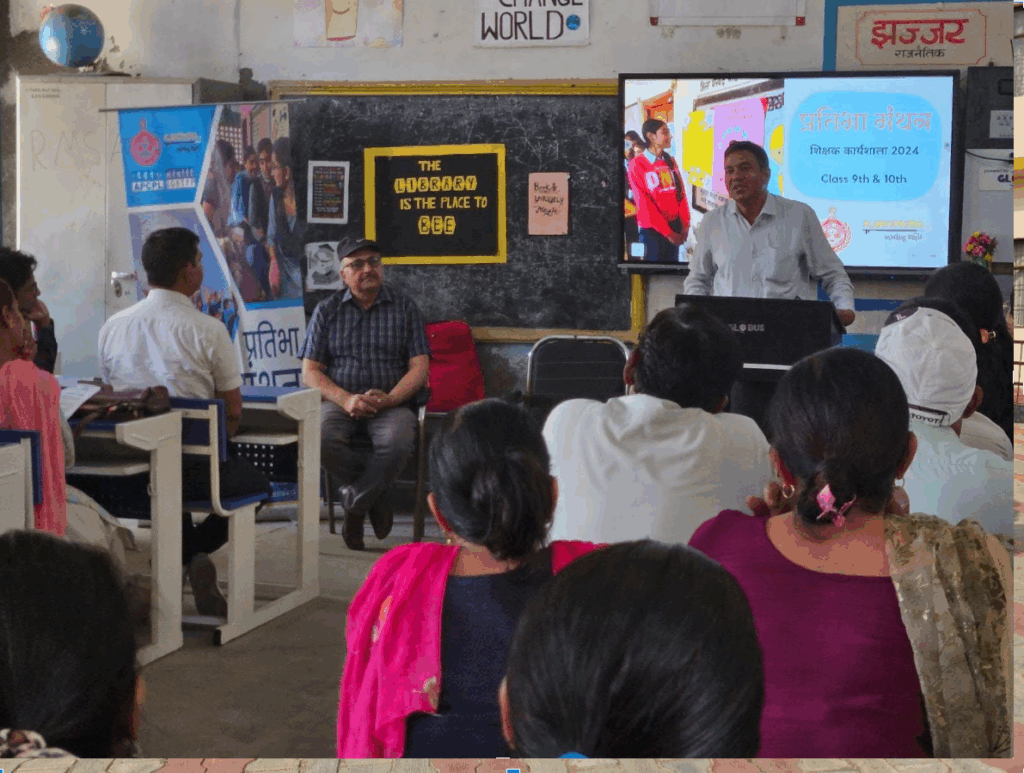
The Micro-Improvement Journey
Rajesh recognised that to build confidence among students, the entire education ecosystem — principals, teachers, and officials — first had to believe deeply in the purpose. The Pratibha Manthan programme was introduced to bring everyone together.
- Creating a shared vision: He began the academic year by engaging with 177 school principals, aligning them on the importance of career guidance and clarifying the teacher nomination process (programme leads in their respective schools).
- Building teacher ownership: He personally attended all five block-level teacher trainings with 366 teachers in attendance and motivated them to take full responsibility for implementing the programme in their schools.
- Empowering block officers: He held review meetings with BEOs, providing clear directions and appreciating their efforts — building accountability through encouragement, rather than inspection.
- Connecting with students: He visited multiple schools, including PM SHRI institutions, interacted with students, identified unique talents, and ensured they were supported through the Pratibha Manthan team.
- Role model sessions: These sessions brought students face-to-face with inspiring individuals from their own communities — doctors, officers, entrepreneurs, school alumni, and artists — who shared real stories of hard work and growth. These interactions helped students see that every big dream begins with small, steady steps.
- Building confidence with celebration: The programme created celebratory spaces such as the Vidyaarthi Career Manch, where students presented their learnings, career charts, and creative projects. Selected schools later represented Jhajjar at the District-Level Showcase, where confidence replaced hesitation and curiosity replaced doubt. At these events, Rajesh strengthened the culture of recognition, encouraging students to articulate their aspirations openly.
Rajesh Kumar’s leadership was defined by his ability to move from oversight to enablement — creating belief, ownership, and collective action across Jhajjar.
Role of Civil Society & Support Systems
The success of Pratibha Manthan — an initiative by the Department of School Education, Jhajjar, aimed at helping students with career guidance — has been a product of collaboration. The Department of School Education and the Alohomora Education Foundation co-implemented the programme, while the District Administration, led by the Deputy Commissioner, offered institutional and logistical support. Together, these partnerships ensured consistent monitoring, community engagement, and district-wide ownership of the initiative.
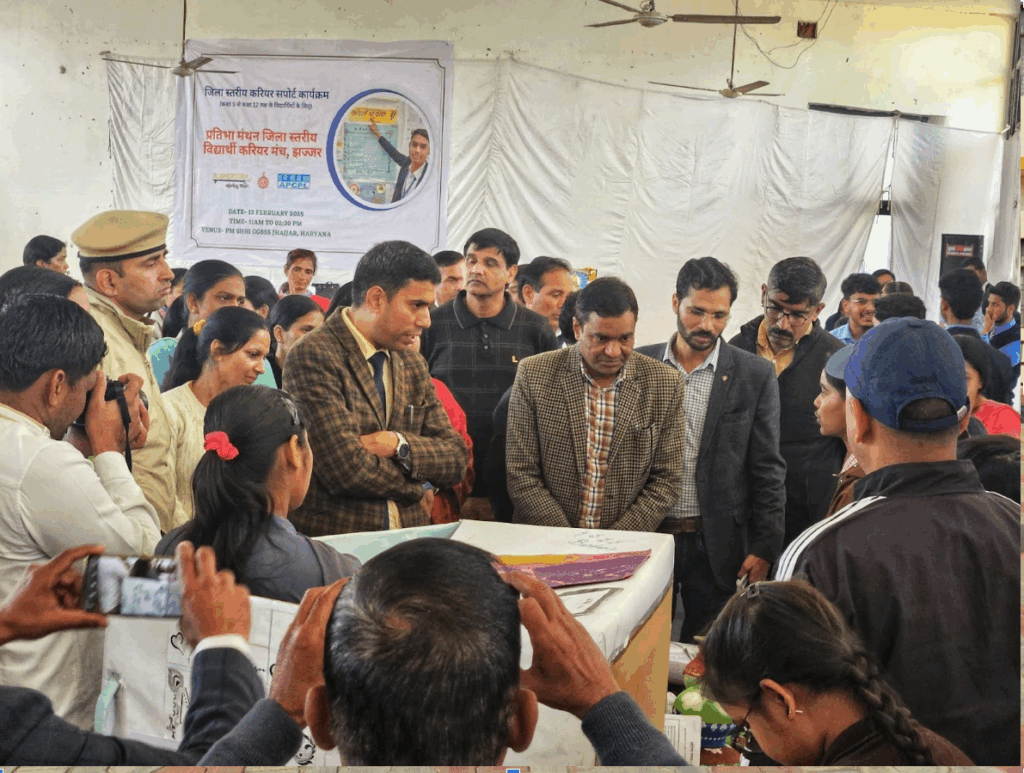
Why He Went Beyond
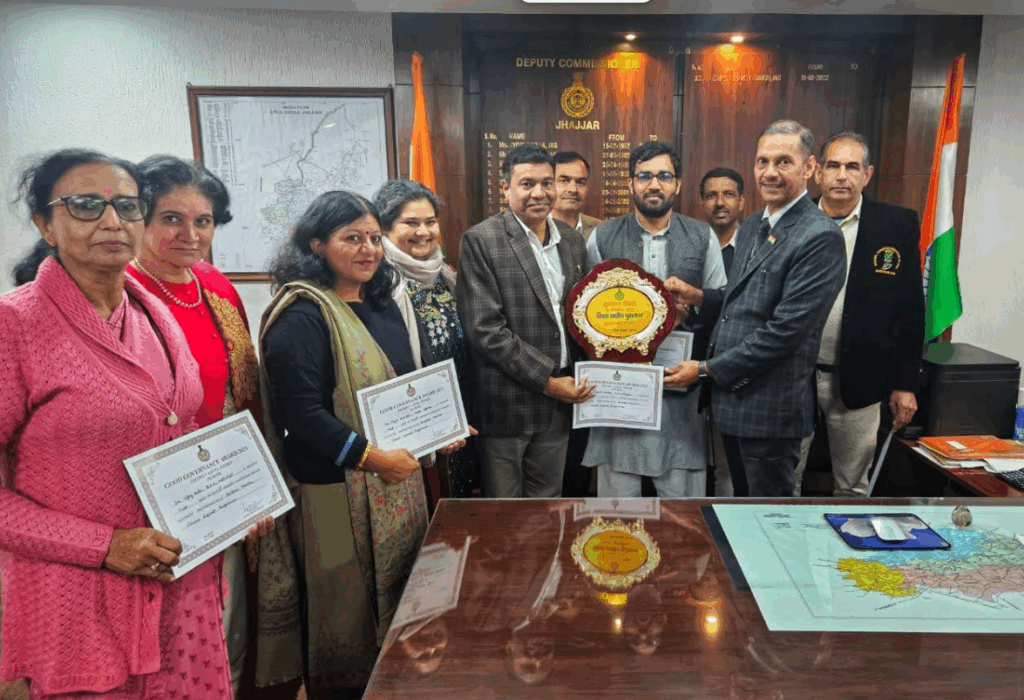
Rajesh Kumar’s motivation is deeply personal. Having once faced the same uncertainty that his students now navigate, he is determined to ensure that no child feels directionless. He finds immense joy in watching students articulate their dreams with clarity, and teachers describe how career conversations have transformed classroom culture. Recognition at the district and state levels for Pratibha Manthan only strengthens his resolve to make Jhajjar a model for purposeful youth development.
The Impact of His Work
Rajesh often remarked, “We’re not just preparing students for exams; we’re preparing them for life.” With this belief, he placed strong emphasis on the initiative. Under his leadership, the programme became a district-wide movement for clarity, confidence and celebration. Over 75% of schools hosted these activities with enthusiasm.
Jhajjar’s classrooms today echo with clarity. Students can name multiple careers, express their goals confidently, and connect their learning with real possibilities.
The program has significantly influenced students’ career choices, encouraging them to explore diverse and skill-oriented pathways. For the first time, students from Jhajjar have enrolled in various skill-based courses outside the district. A girl student from Tumbaheri secured admission to the Navgurukul Institute in Pune; students from Barhana joined the GMR Institute in New Delhi and have secured well-paying jobs. Several others are pursuing courses in agriculture.
In total, 28 students have successfully gained admissions, internships, or employment opportunities in different skill-based institutions.
Impact His Work Is Creating
“We now have a district where every school knows that career guidance is not optional — it’s essential.”
This story is part of ‘Small Steps to Build Great Schools’ Vol II- a Coffee-table Book celebrating the leaders who go beyond their roles to make education inclusive, joyful, and rooted in belonging, for children in India.
🔗 Read more such stories of transformation here: https://heyzine.com/flip-book/9ab883d082.html


 Link copied to clipboard!