Who He Is
Born in 1986 in a remote corner of Nagaland, John Khangnyu grew up amidst conflict and hardship. When tribal tensions tore through his village, his family lost everything and took refuge in the jungle. Both his parents were deaf and mute. John and his three siblings were raised by their grandparents, who gave them love and built their resilience in the face of adversity.
His journey in education began in a small government school. Later, when his family could no longer afford his studies, a kind mentor stepped forward to support his education—an act of compassion that shaped John’s life purpose. He decided to dedicate his life to giving others the same chance he received.
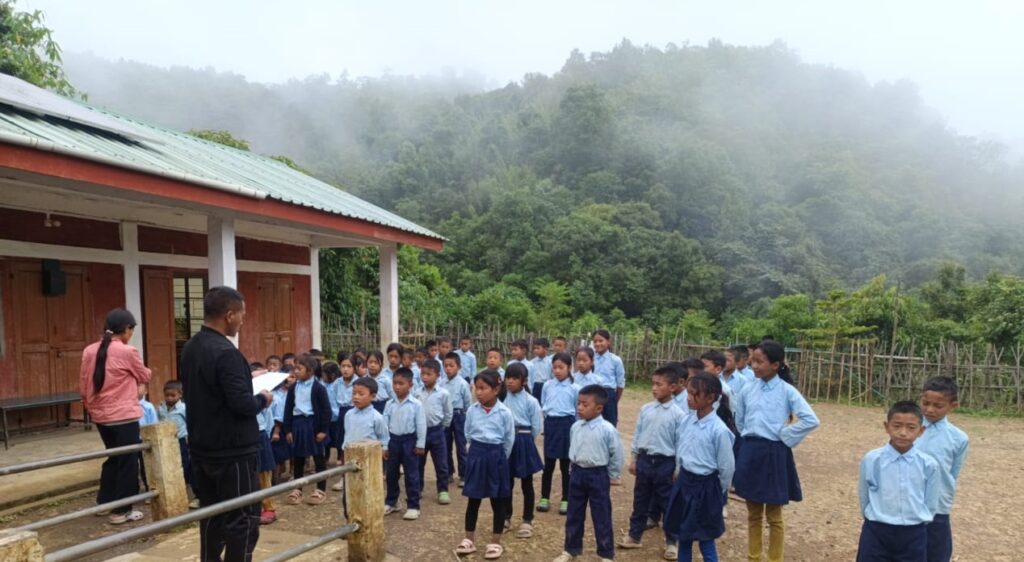
Today, as the School-in-Charge of the Government Primary School in Shinnyu village, Mon district, John leads with humility and deep commitment. In his tenth year of service, he manages a school of 73 students and three teachers, nurturing learning in one of the most inaccessible parts of the state.
The Problem He Saw
When John first arrived in Shinnyu village, he faced a harsh reality: the school and the community were trapped in darkness—both literally and figuratively. The village lacked basic infrastructure. There were no proper roads, no electricity, no network access, and classrooms were in poor condition.
The absence of electricity meant no lighting for studying after sunset, limited or no use of digital learning tools, and no power to operate the school. Parents, preoccupied with survival and uneducated themselves, could not prioritise education. They often kept children at home or in the fields. With no mobile network or connectivity, the lack of infrastructure left the community isolated, preventing access to educational resources, healthcare, and development opportunities.
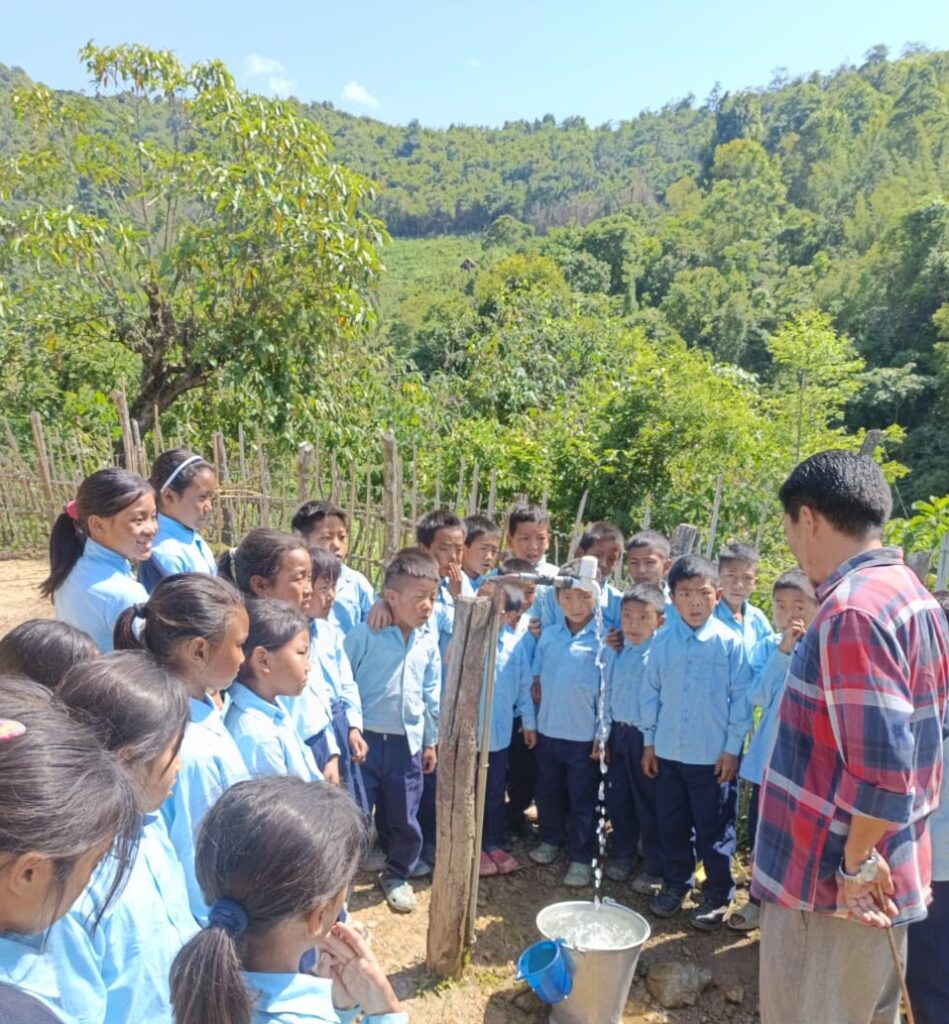
The Micro-Improvement Journey
John realised that addressing these infrastructural gaps was the first step towards creating a functional school and an empowered community.
- Raising Awareness: John documented the village’s hardships, lack of electricity, and poor school facilities, which left children disengaged and wandering aimlessly. He shared these stories on social media, which attracted public attention and motivated individuals and institutions to extend their support.
- Engaging Authorities and NGOs: He reached out to the district administration and organisations like the Global Himalayan Expedition (GHE) to secure approvals, resources, and technical assistance for electrifying the village.
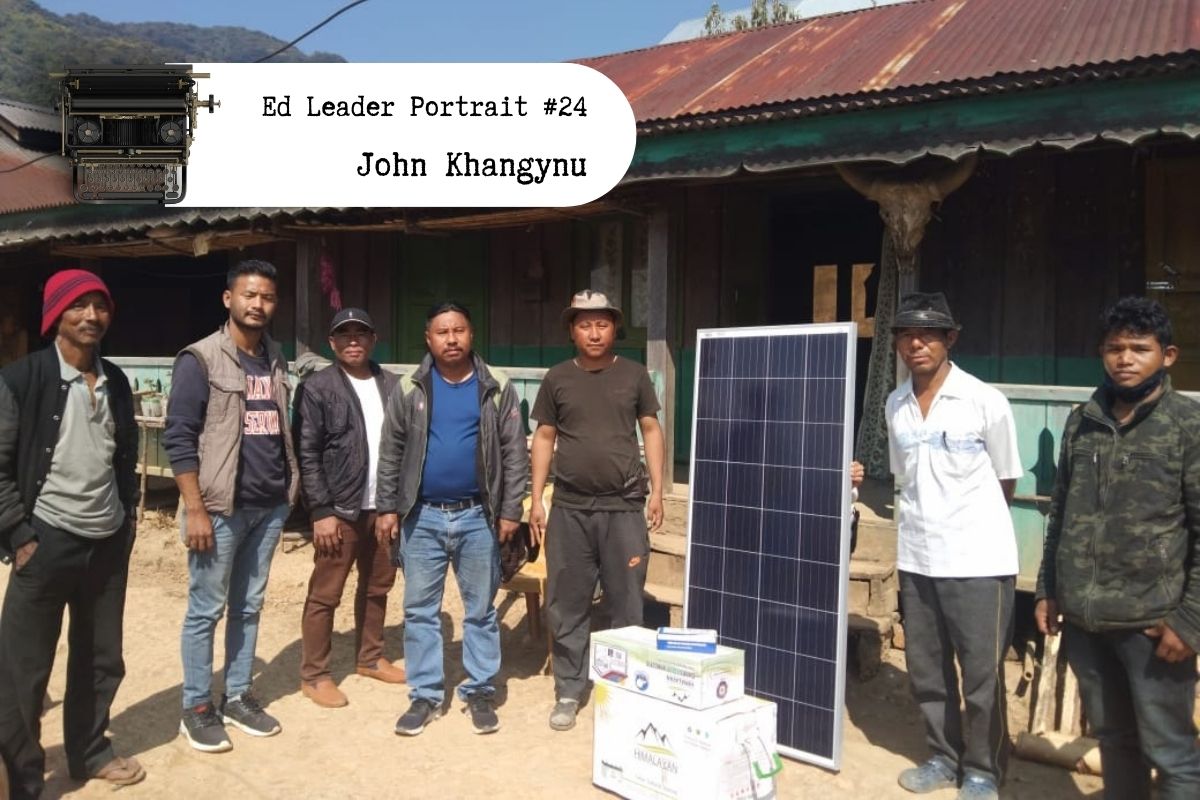
- Mobilising the Community: John involved villagers in transporting solar panels up the mountains, housing engineers, and assisting with installations—making them active participants in the project.
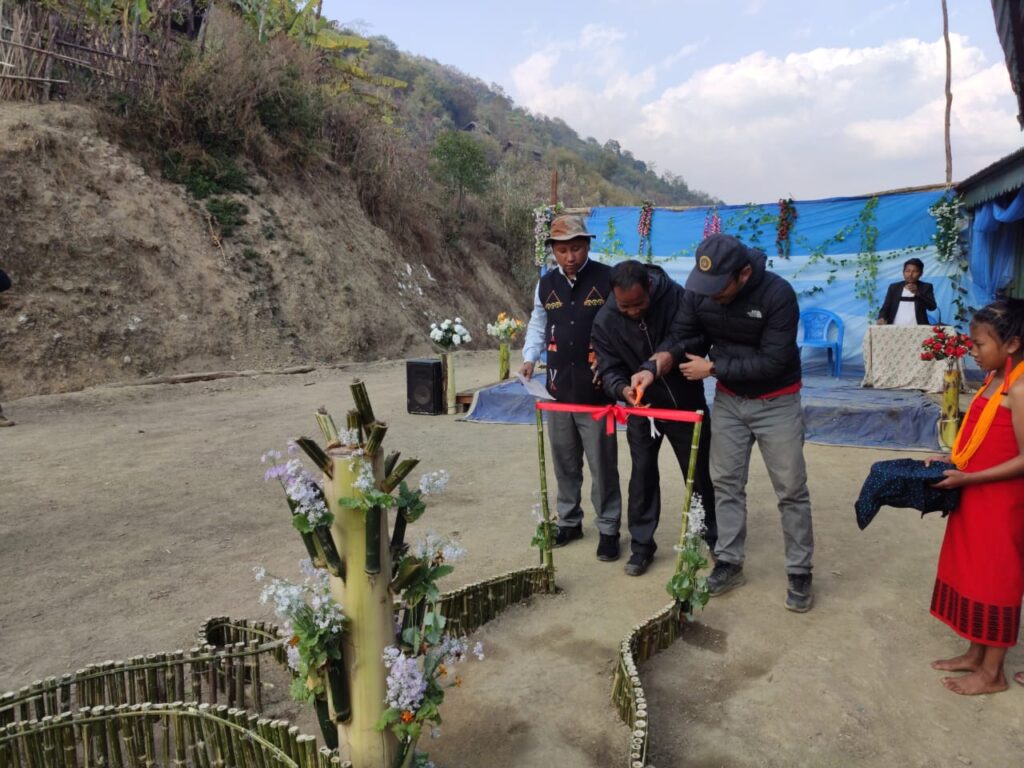
- Electrifying the Village: Solar power was installed in 60 homes, the school, community hall, and church, providing the first-ever reliable electricity connection and, in turn, enabling digital learning in the school.
- Enhancing Learning Environment with Technology: With electricity in place, John used laptops, speakers, and other digital tools to enrich the learning environment.
- Introducing Life Skills: John also held regular parent meetings and introduced practical skills such as bamboo handicrafts to enhance both learning and self-reliance among students.
The journey demanded endurance. John trekked up the mountains over ten times to capture photographs and collect coordinates. He submitted applications and requests to the authorities with detailed requirements. Transporting solar materials that were sent by GHE from Delhi to such a remote village tested everyone’s strength and spirit. Rains turned the roads to mud, vehicles broke down, and every step forward required community effort. Yet, every challenge only brought people closer. “When we carried those panels together, we weren’t just bringing electricity,” John says. “We were instilling the belief that every village deserves progress.”
Role of Civil Society & Support Systems
The success of Shinnyu’s electrification rests on partnerships. GHE provided solar technology and the district administration ensured the requisite permissions and guidance. John’s network of friends and well-wishers raised awareness and support through social media. The village community’s unity and willingness to contribute made the transformation sustainable—one owned and led by them.
Why He Went Beyond
John’s motivation comes from his own life. Having received help when he needed it most, he feels an unshakeable responsibility to give back. “Someone once changed my life with kindness,” he says. “Now it’s my turn to do the same for others.” His mentor’s faith and empathy continue to guide his leadership.
The Impact His Work Is Creating
Electricity has changed everything in Shinnyu. The school now has solar-powered lighting, laptops, and speakers. Children actively engage in learning, use digital tools, and attend school regularly. Parents also attend PTMs and engage with the school more often, proud of the change they see in their children.
Evenings in the village have transformed—families cook, study, and socialise after sunset. John continues to meet parents weekly, encouraging home-based learning practices.
The initiative also inspired further improvements: the school building, once in ruins, is now being rebuilt with funds from Samagra Shiksha, making the learning environment safer and more vibrant.
His Words
“Our responsibility should not remain within four walls. Whether big or small, every act of change must come from love. When we work with compassion, we not only brighten lives- we light up entire communities.”
This story is part of ‘Small Steps to Build Great Schools’ Vol II- a Coffee-table Book celebrating the leaders who go beyond their roles to make education inclusive, joyful, and rooted in belonging, for children in India.
🔗 Read more such stories of transformation here: https://heyzine.com/flip-book/9ab883d082.html


 Link copied to clipboard!