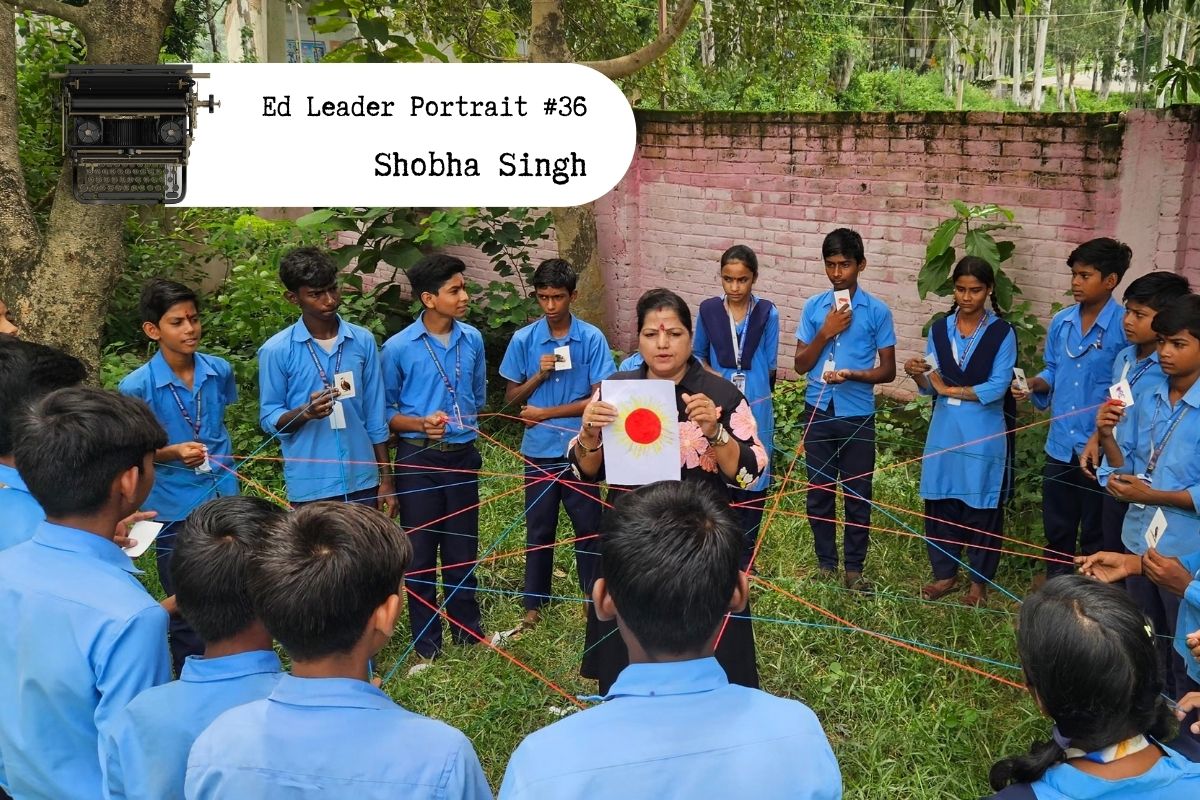
A plastic bottle, a balloon, a pinch of turmeric, half a lemon. In most schools, these would be rubbish or kitchen scraps. In Shobha Singh’s classroom in Jamui, they are laboratory equipment. The school had no laboratory, and before Shobha arrived, it had never had a science teacher. The bottles were the answer to a simple refusal: the missing laboratory would not be allowed to mean missing science.
A school no one expected much of
Shobha grew up in Varanasi, Uttar Pradesh, in a home shaped by a father in the Police Department and by discipline, responsibility and service. The love of science came from a science teacher at school, who taught not just the subject but how to observe, and how to ask why things happen. That teacher is the reason Shobha chose science, and then chose to teach it.
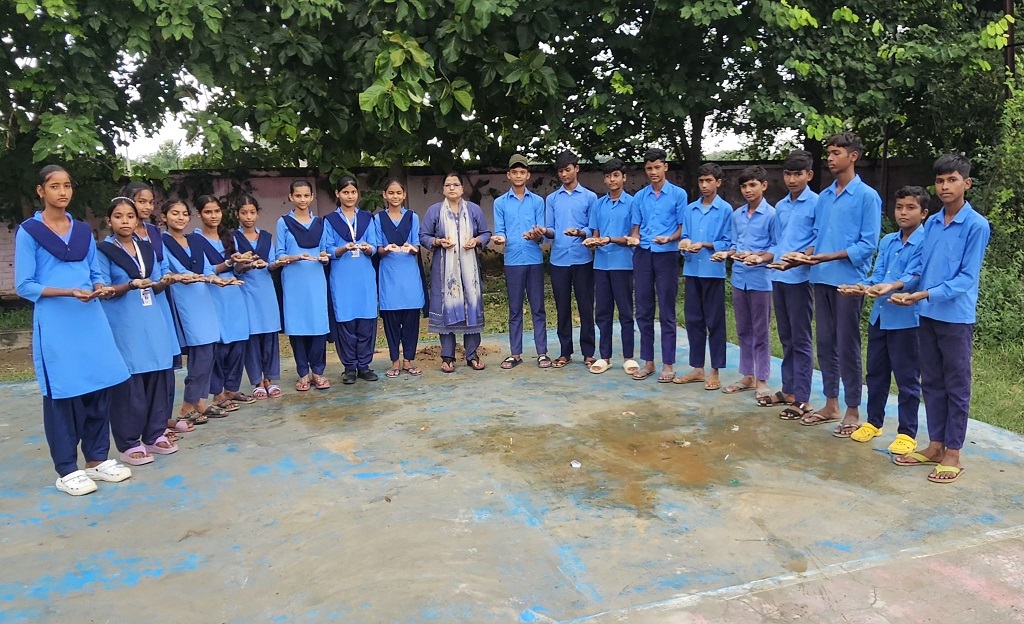
On 3 June 2013, Shobha joined the government middle school at Malaypur, in the Barhat block of Jamui district, Bihar. It is an area long affected by Naxal violence, and few people there expected much from school. Not many children were interested in studying.
The school had very little to teach science with. There was no laboratory and no science teacher had ever worked there. For most children, science was something to read and memorise from a textbook, a list of answers with no questions behind them. They had almost no chance to watch something happen, to try something out, to ask why and find out for themselves.
Shobha could have waited for equipment to arrive. Instead, the work started with what was already lying around.
Science from the kitchen shelf
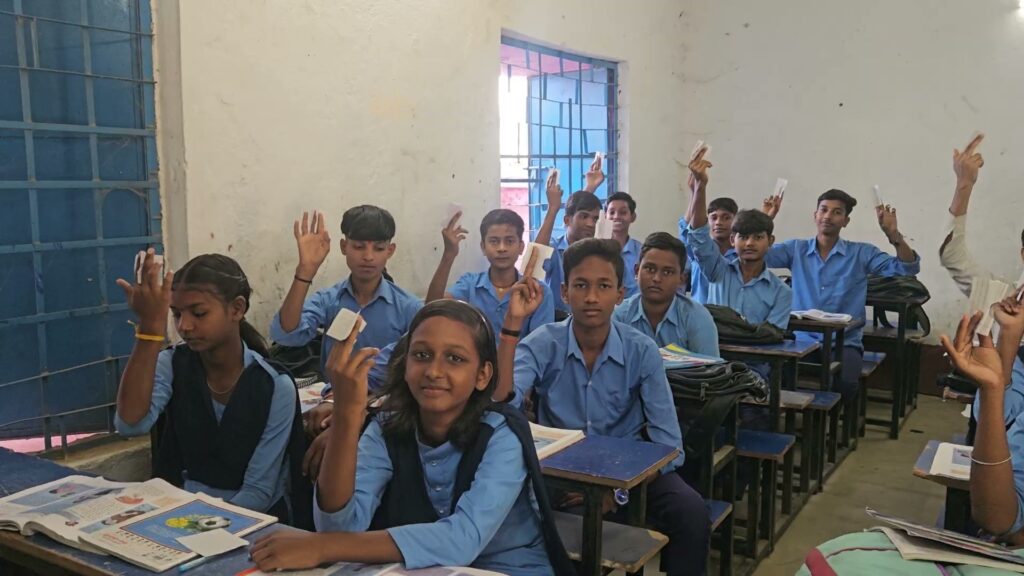
Used bottles, balloons, tetra packs, paper, straws, lemons, turmeric, vinegar, salt, sugar and matchsticks became the tools of the science class. Over the years, Shobha built more than forty hands-on activities out of materials like these, all without a conventional laboratory.
With them, children explored light and reflection, air and water pressure, how heat travels, electricity, photosynthesis, osmosis and chromatography. They tested food for adulteration and watched seeds germinate. They took a science class to the river to study its ecosystem. In one photograph from Shobha’s classroom, a red laser beam zigzags between mirrors across a darkened room.
The point was never to hand children the answer. In Shobha’s class, they were asked to look first, then guess what would happen, then test it, argue about it, and reach their own conclusion.
When there was no microscope, Foldscopes, folding paper microscopes that cost very little, let children look at the microscopic world for the first time. When the children first saw the stomata on a leaf, one of them said, “Wow! Leaves also have mouths like us!” Another, looking at a single drop of pond water crowded with living things, asked, “Aree, koi jeev itna chhota bhi ho sakta hai?” Can anything alive really be that small? Shobha also designed a Low-Cost Science Kit so that several concepts could be taught with simple materials, in any classroom.
A farm that asks questions
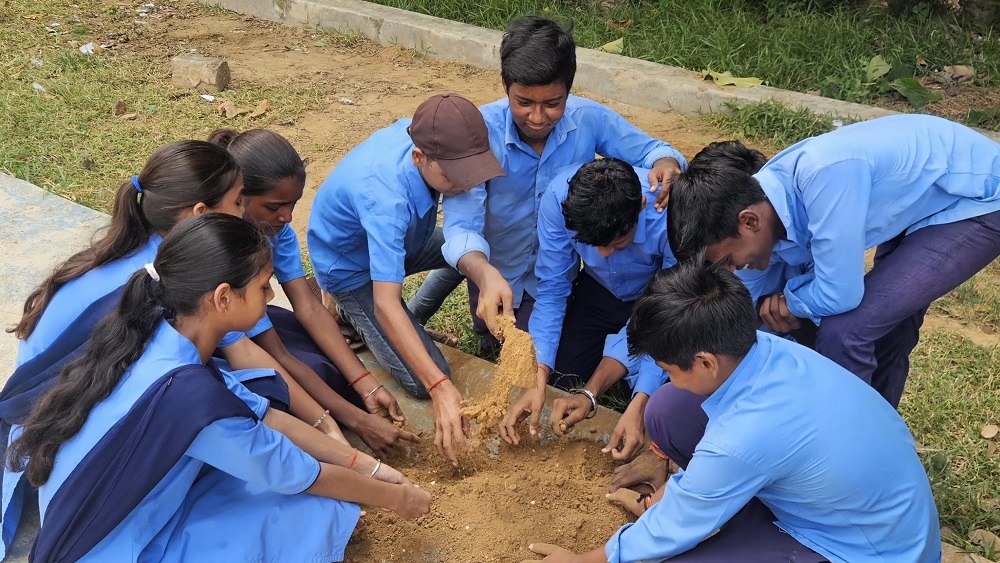
Shobha wanted learning to leave the classroom, too. So the school started a Learning Farm, and it became a living laboratory. Children grew crops side by side with organic and chemical methods, made compost and vermicompost, and watched what each choice did to the soil, the plants and the environment around them. They observed, compared, looked things up and argued over what they saw.
More than 250 students have learned this way. Slowly, the habit of asking questions turned into a habit of solving problems.
Children who invent
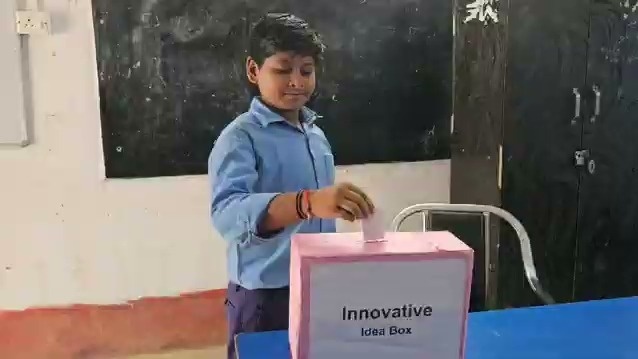
That habit shows up in what the children now build. Priyanshu Kumar, a Class 8 student, knew someone who died when a bike crashed into a roadside tree at night. Priyanshu’s answer was a Green Tree Safety Reflector: reflective strips fixed to tree trunks so that headlights pick them up from a distance. Another student, Sanskar, was tired of watching the family unclog the sink at home, and designed a removable mesh drain guard to stop it from happening.
Every year, students from the school are selected for the INSPIRE Award MANAK, a national programme for school students’ innovations, and for the Medha Scholarship. One of them, Ayush Kumar Singh, reached the national level of INSPIRE MANAK with a Bike Towing Tool of Ayush’s own invention. Her students from the school have also represented Bihar at the Eastern India Science Fair. More than 80% of students consistently pass in the first division.
Parents noticed. Their children were more curious, more confident, and more willing to ask questions and try new things. More than 50 children have moved from private schools to this government school.
The laboratory at Malaypur is still not a room. It is a shelf of bottles and balloons, a farm behind the school, a river bank, but a class full of children who have learned to ask why before they are told.
Teaching the teachers
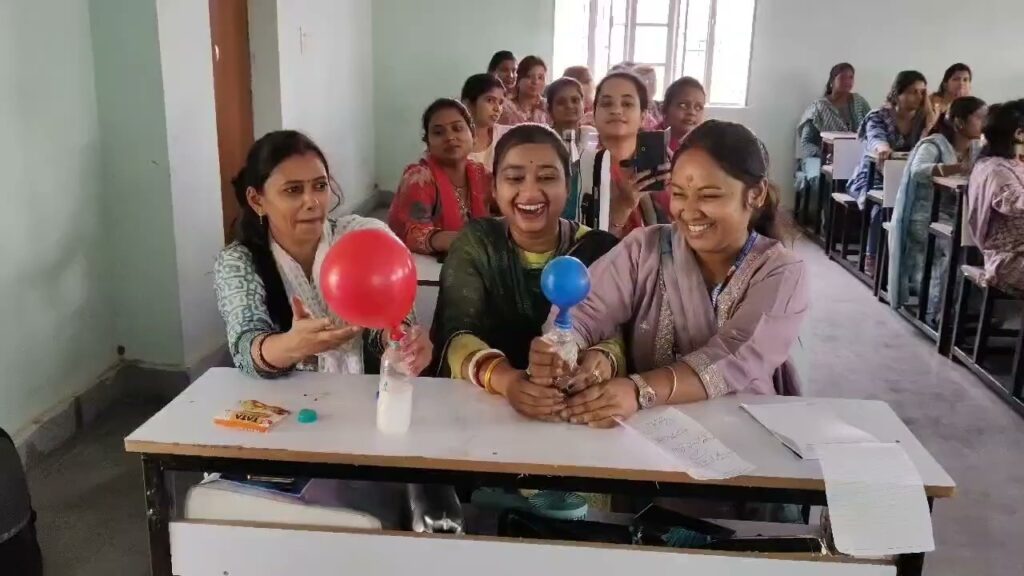
After thirteen years in the classroom, Shobha teaches science and mathematics and works as a master trainer for other teachers at the district and state levels. In 2025, Bihar’s SCERT selected Shobha to represent Jamui district at a state science seminar in Patna.


 Link copied to clipboard!