Bringing back the missing girls
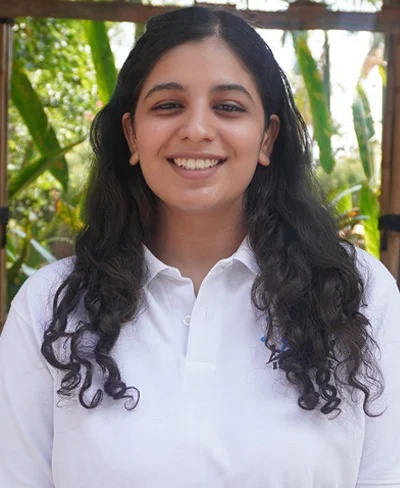
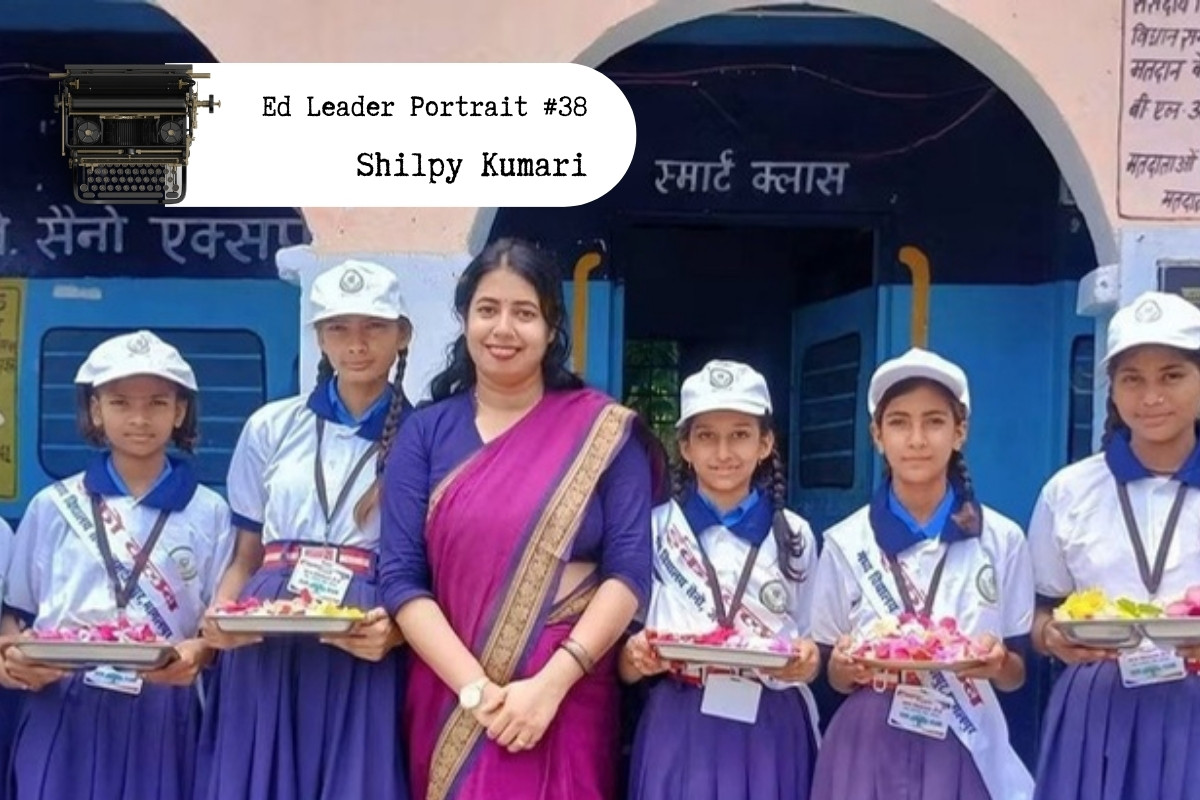
Two sisters in a village in Bhagalpur could not both go to school, because someone had to stay at home. Their teacher did not ask the family to choose between them. She asked for fifteen days each. It is the kind of answer that only comes to someone who has stopped asking whether girls should be in school, and started asking what, exactly, is keeping each one of them away. Shilpy Kumari has been asking that question, one girl at a time, for two years.
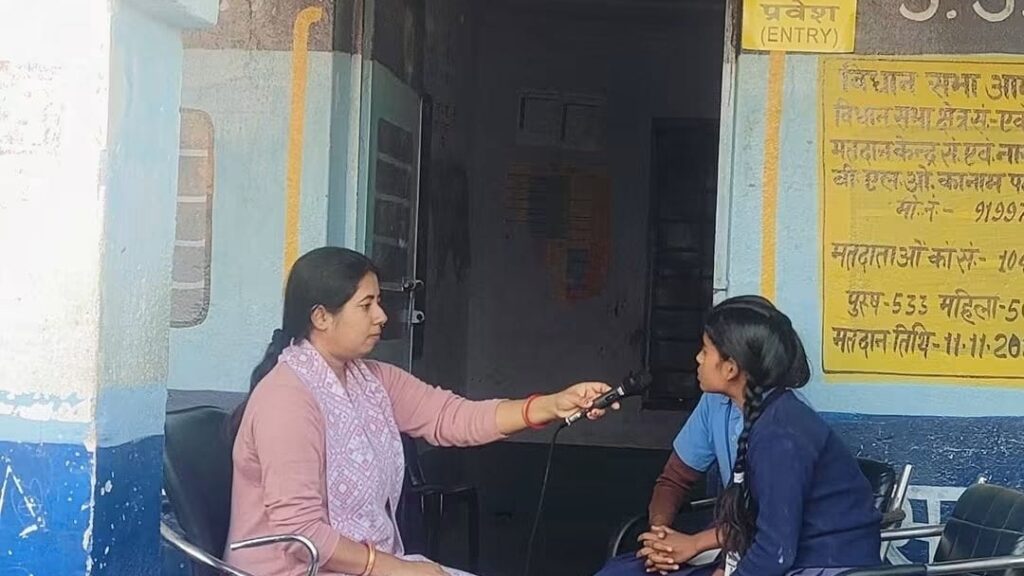
When Shilpy began teaching at the government school in Saino Jagdishpur, the register told her something before any child did. Of nearly a hundred students, around eighty were boys and twenty were girls. Only two or three of those girls came to school with any regularity.
She started asking why, first the girls and then their families, and the answers were not one problem but many. Many parents believed a girl needed education only “just enough so that they can get married.” Girls were expected to look after younger brothers and sisters, to run the house, or to go with the family when it went out to work. Some girls wanted to study and were simply not allowed to. Some parents felt a co-educational school was not a safe place to send a daughter. And some girls stayed away for a reason no one said out loud until Shilpy asked. “As soon as this problem starts,” they told her, “we hesitate to come to school.”
Even the girls who came were often called home after lunch to help with ropa and katni, the planting and the harvest, and by Class 8 their schooling had become a formality before marriage. Attendance, she realised, was only the part of the problem that showed. Telling families to send their daughters would change nothing. She would have to find out what was keeping each girl at home, and answer that.
Shilpy was born and raised in Patna. When her father lost his job, the family went through years of struggle, and it was her mother who refused to let that reach her daughter’s education. She believed schooling was the one thing that could build Shilpy a better future, and she kept her studying. When money ran short, Shilpy moved from Patna Convent School to Gardanibagh Government School, where the Hindi-medium textbooks were hard going at first. She worked at them until she came top of the whole school. After college in Patna she began a career in banking, then left it for teaching, which she calls her true good fortune. She joined the middle school at Saino Jagdishpur on 21 November 2023 as a primary teacher, and took on science and mathematics because the school needed someone to teach them.
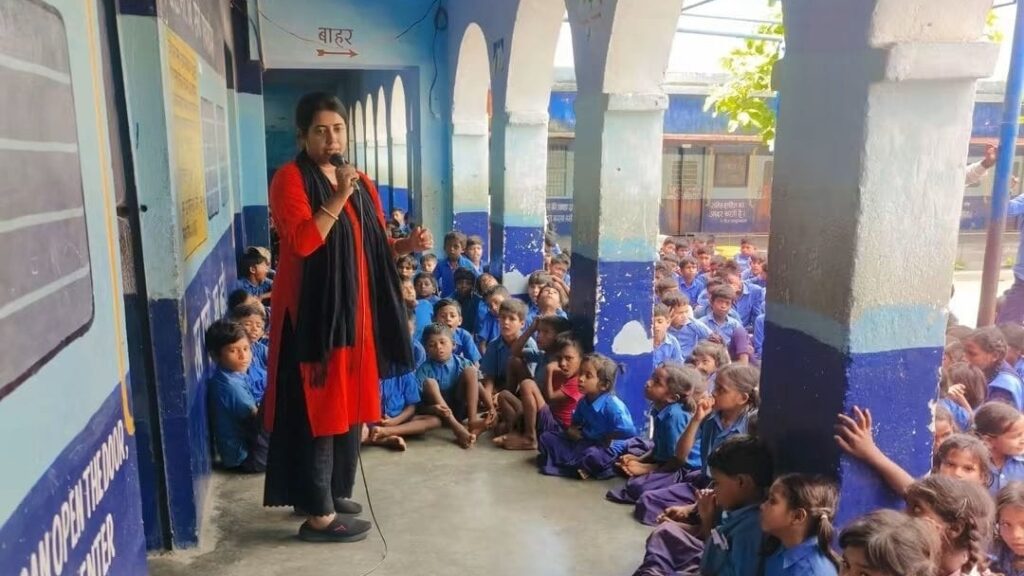
So she went to the families. She took a microphone and a speaker from village to village, inviting parents to a Parent-Teacher Meeting every month. When they came, she did not lecture them. She told them about herself. “If my parents had thought this way,” she would say, “I wouldn’t be here today.” On the school’s smart board, she showed them inspirational videos, and she made a point of inviting the girls’ mothers to watch award-winning documentaries on girls’ education. On Bagless Days, children put on skits against child marriage, and the school took street plays on girls’ education into the middle of the village.
Conversations moved some families. They did not move attendance enough, so she added something the girls could hold. A girl who reached 70 to 75% attendance received a study kit, a digital slate, a school bag or a sports T-shirt, small things that made coming to school feel like it counted.
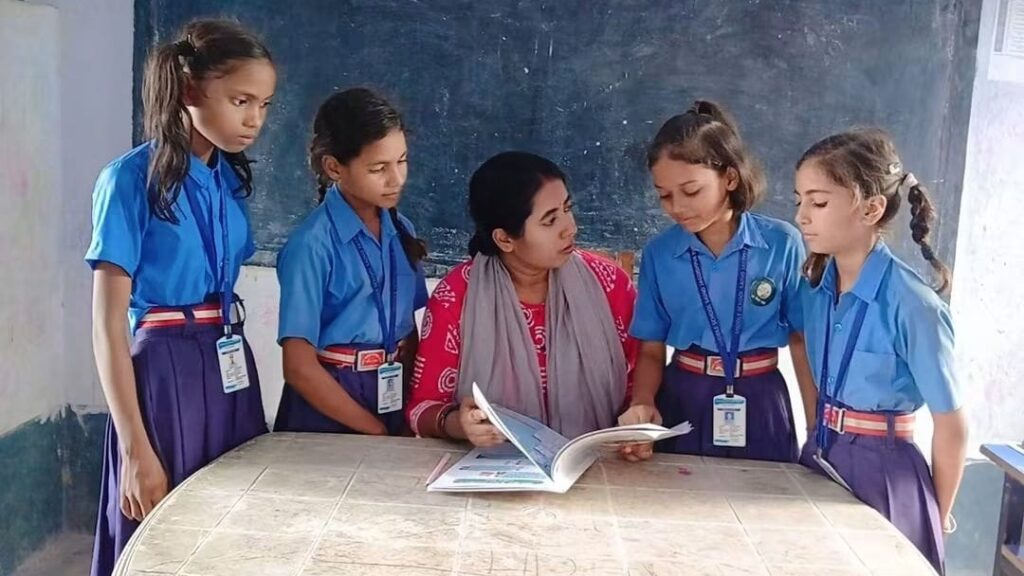
Some absences could not be talked away, because the work at home was real. Two sisters at the school came once or twice a month; someone had to stay back and help, and it could not be both of them at school. Shilpy sat down with the family and worked out a rotation. One sister would come for the first half of every month, the other for the second. Neither would have to give up school completely for the other.
It was a small arrangement, made for one family. It is also the clearest picture of how she works: not a campaign for every girl at once, but a solution shaped to one girl’s circumstances, and then the next girl’s.
The hardest barrier was the one girls were least likely to name. Without sanitary pads at school, a girl who got her period simply stayed at home. Shilpy began paying, from her own pocket, for hygiene kits with sanitary pads, handwash and sanitiser for the girls of Classes 6 to 8. Today, 20 to 30 girls receive that support every month.
She pushed the girls towards the parts of school that had quietly belonged to boys. She encouraged them into NCC and sports, and gave them prizes of her own, so that a girl who ran or marched well was recognised the way a boy would have been.
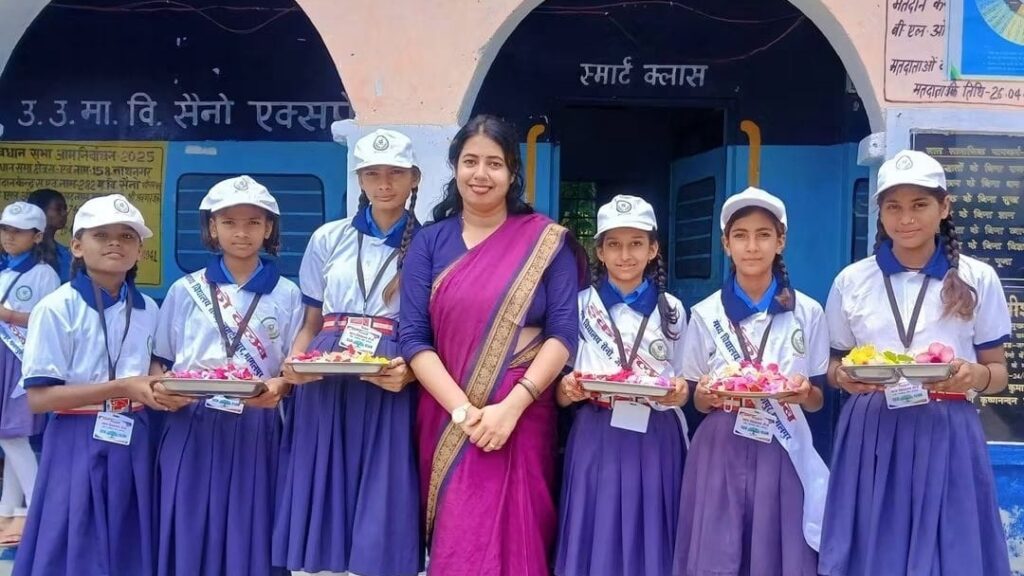
What these small steps could register was more than one could have anticipated. The two sisters became regular students within two months. Today, one of them is the Prime Minister of the school’s Bal Sansad, the children’s parliament. The other leads its Eco Club and Meena Manch. Girls who were once kept at home now run parts of the school.
They are not alone. Over two years, around forty girls have benefited directly from Shilpy’s work, and girls’ attendance has risen by 10% to 15%. Girls now take part in sports, NCC, science exhibitions, cultural programmes and the Eco Club, and some have gone on to district- and state-level platforms. Parents who once questioned why a daughter needed to study have begun to see what their daughters can do, and to back them. Attendance at Parent-Teacher Meetings has gone up by about 30%, and there are now so many girls at the school that it runs separate sections for girls and boys. The science exhibition Shilpy organised was the first in the block; she is now the block’s nodal teacher for project-based learning, the INSPIRE Award-MANAK and the Viksit Bharat Buildathon, and her project-based learning work has been honoured with a Gaurav Shreni award.
For Shilpy, the work has come down to one question, asked again for every girl who does not come: what is the reason, and what would it take to remove it? Sometimes the answer is inside the classroom. More often, it is at home, or in the village, and she goes there to find it.
“Every girl who stays at home has a reason. Find that reason, and you will find her way back to school.” she says.


 Link copied to clipboard!