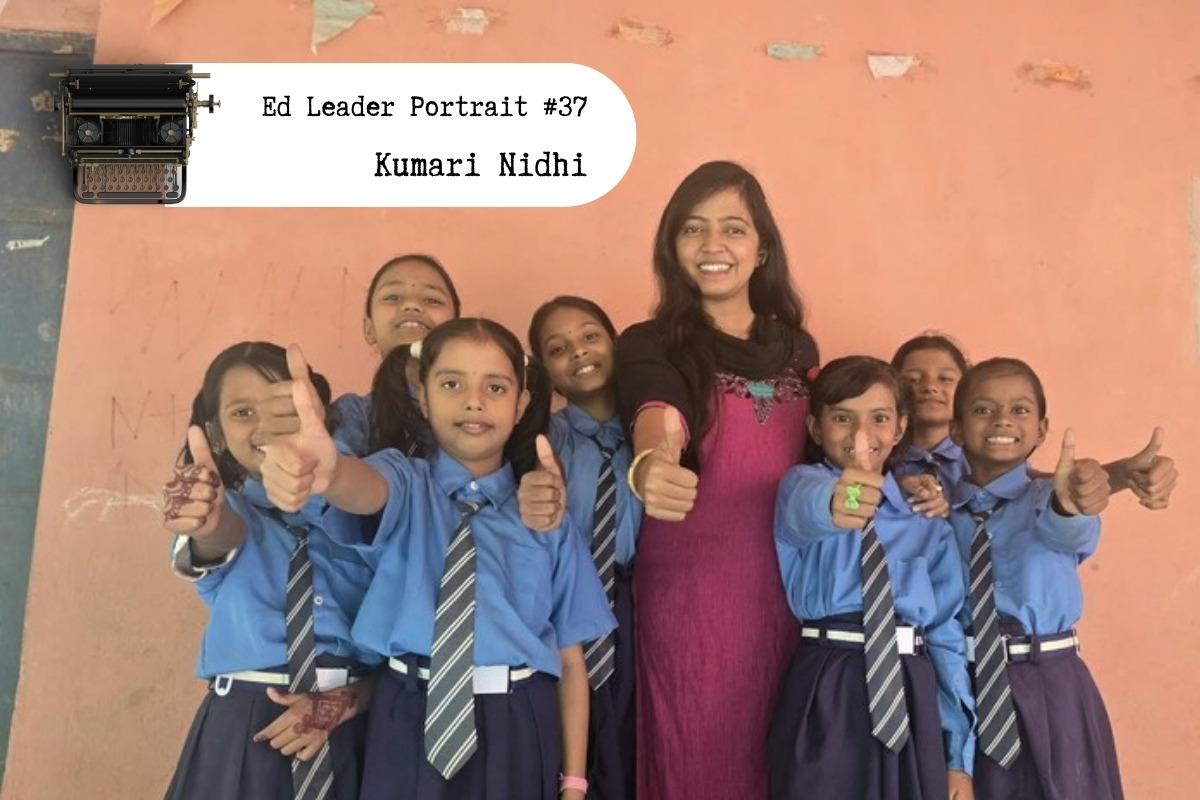
How Kumari Nidhi built schools out of nothing in Kishanganj, and kept its girls in them
The school had no land and no building, and it had one teacher. Children sat on mats under a grove of bamboo, facing a blackboard propped up on a stand. When it rained, there was nowhere to go. Kumari Nidhi looked at that grove and saw a school that had not been built yet. She also saw the girls sitting in front of her, and knew how few of them would still be in school in a few years’ time.
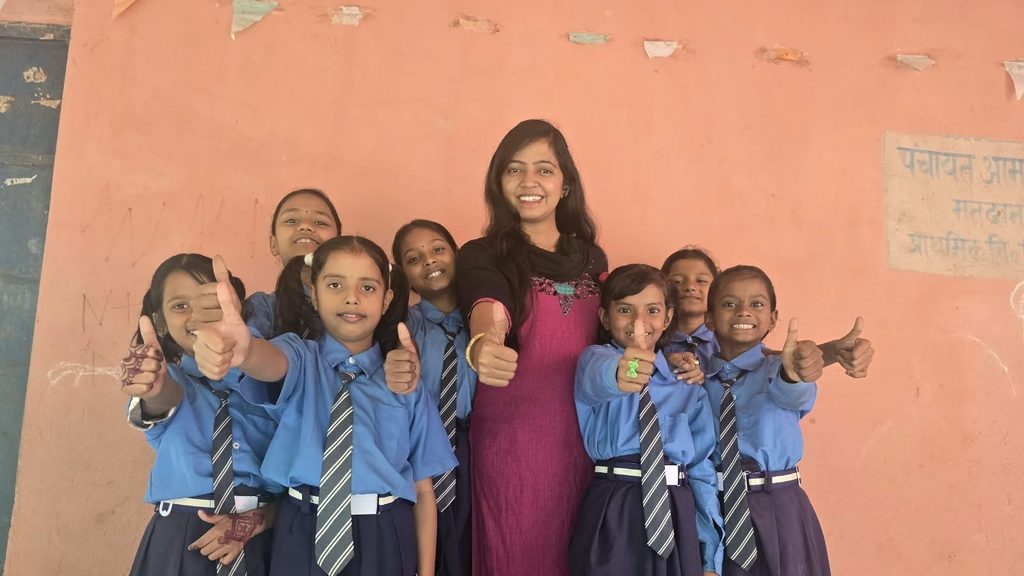
Nidhi is a first-generation learner. She was the first girl from her village to pass the matriculation exam in the first division, and her father kept pushing her to study and to go further. She knows from her own life what stands between a girl and school, because she had to push past it herself.
Outside school, her first love is literature. She has written ten books, among them a novel, a collection of children’s stories and a book of poems, and has edited an anthology with other writers. At 13, she received a letter of congratulations from President A.P.J. Abdul Kalam for one of her poems. At home today are her husband, their two children and her elderly father-in-law.
She could have taught somewhere easier. She chose instead to work in one of Bihar’s most sensitive border regions, a block of Kishanganj district about 45 km from the district headquarters, in the narrow strip of land known as India’s Chicken’s Neck. Nearly all the families here are from a minority community. Most are poor. Many move with the seasons in search of work, and every year the floods come and shut the schools.
Girls lost the most. At Primary School Suhagi, only two girls had ever continued their education after Class 5. The rest were kept at home, married young, or simply stopped coming. No one talked about periods, and there were no pads, so a girl who got hers stayed away. Many families believed that a daughter’s schooling could end at primary, and that was that.
Nidhi had been one of those girls who went further. She wanted it to stop being rare.
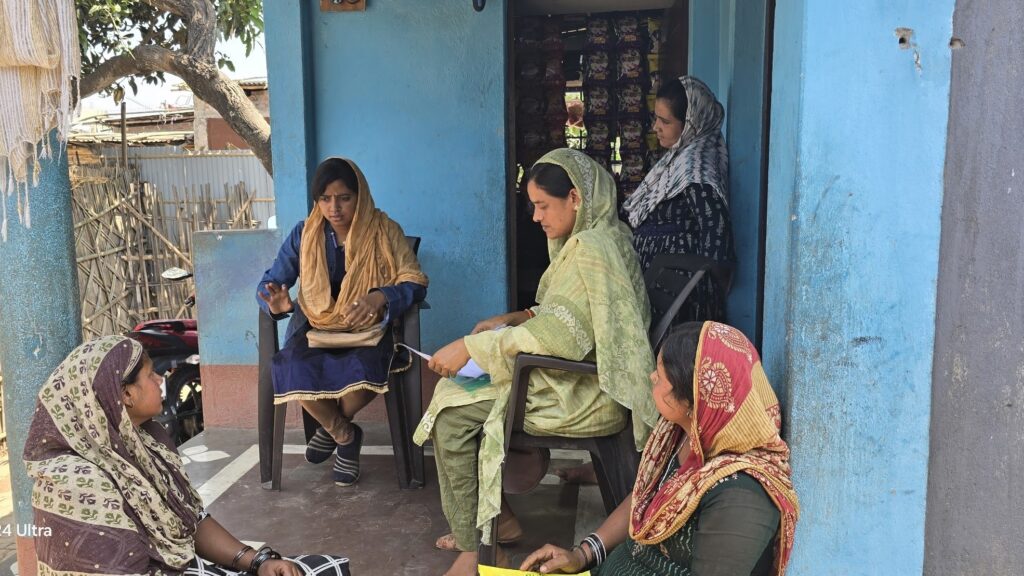
She began where the decisions were made: at home. She went from door to door, sitting with parents and talking about child marriage and about what it would mean for a daughter to keep studying. She did not do it once. She kept going back.
She began regular sessions on menstrual hygiene, and gave sanitary pads free of cost to girls, and to their mothers when they needed them. Something that had kept girls at home in silence became something the school could talk about and solve.
Slowly, girls who had left began to return. More than 200 girls have now come back into school. At Suhagi, where two girls once went past Class 5, almost every girl now goes on to study further, and not one has dropped out.
Some of the girls needed more than a conversation with their parents. Nidhi has taken personal responsibility for the education of 12 girls who lost their fathers, and sees each of them through school. Four of them have already passed Class 10 in first division, and are still studying.
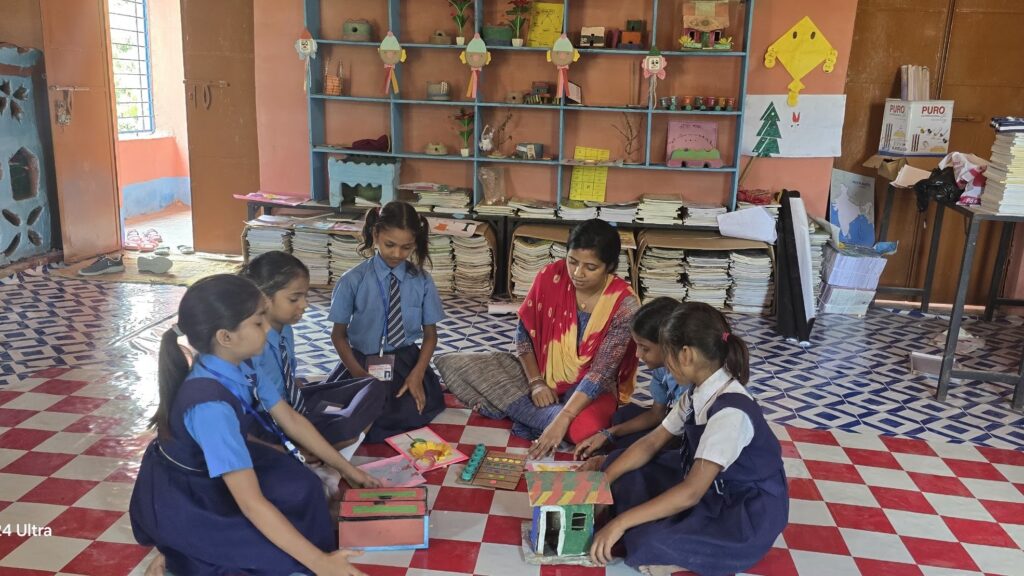
Many of the children in her schools were far behind in reading, writing and basic maths. Nidhi changed the way they were taught, towards activity and joy, and towards meeting each child at their own level instead of the textbook’s.
She set up the Nipun Bal Manch Corner, a space in the classroom where children do not only learn but also read, write, draw, make things and speak up. It worked well enough that the Bihar Education Department took the model up. At Suhagi, more than 80% of the children met their foundational learning goals; at Birnabari, her school today, about 90% have. Her school has been declared a NIPUN school.
She did not want the children’s voices to stop at the classroom wall. So she began editing and designing the Nipun Bal Manch magazine, where children from schools across Bihar publish their poems, stories and art. Today, children from hundreds of schools are part of it. One of them, a young student named Sanskriti Chaudhary, was inspired to write a whole book of children’s stories, and it earned her a place in the India Book of Records.
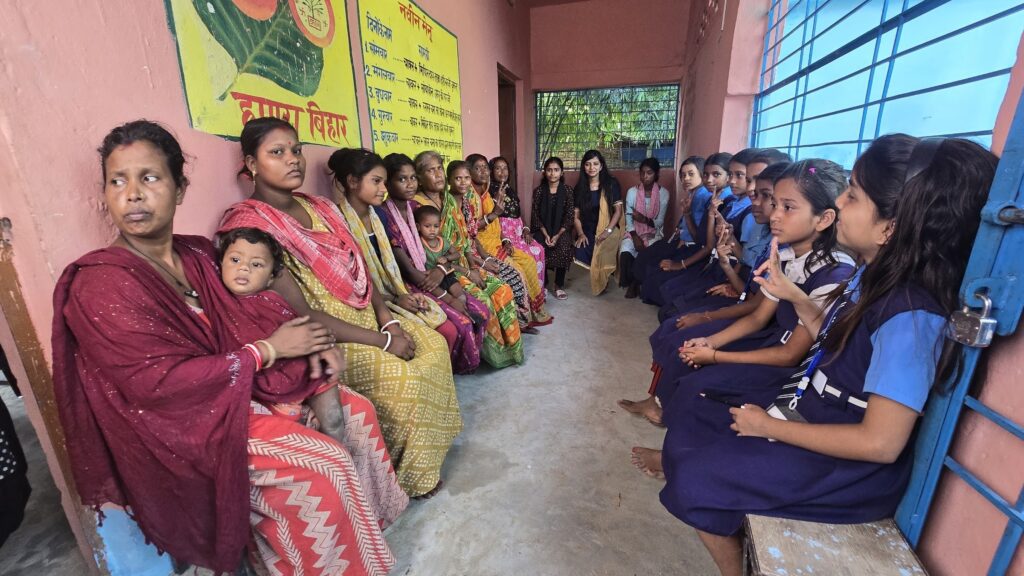
Classes under a bamboo grove could only go so far. Nidhi went looking for every child who was not in school, with household surveys, enrolment drives and meetings with parents, and then set about giving them somewhere to sit.
She did not do it alone. Through a campaign she called Our School, Our Responsibility, she asked the whole village to treat the school as its own. The community, the School Management Committee, local representatives and the education department came together. Schools that had run for years without land or buildings gained classrooms, libraries, toilets, kitchens, projectors and bright rooms made for children.
The numbers followed. At Primary School Satbolia, where she took charge on the last day of 2010 in a school with no land and no building, enrolment went from 0 to 450. At Primary School Suhagi, which she joined in 2014, classes had been held under a tree or in a field for seven years. Since July 2025 she has led Primary School Birnabari, where enrolment has risen by 300% and she is working towards every child attending every day.
When the floods came, she did not wait for the water to go down. She ran education camps so that the children kept learning, and during the COVID-19 pandemic she found other ways to keep them connected to school.
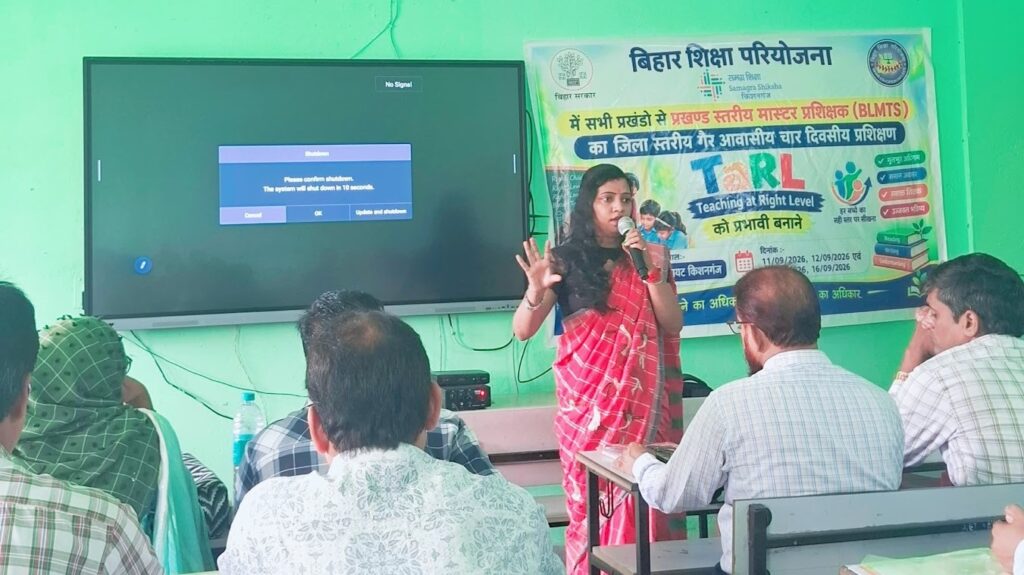
Nidhi knows that one teacher cannot reach every child. As a state-level master trainer, she has trained more than 800 teachers in foundational learning and project-based learning. Through another magazine, Nipun Samvad, she connects more than 2,000 teachers who share what is working in their classrooms. What began in one school now travels much further.
In 2025, the President of India presented her with the National Teachers’ Award at Vigyan Bhavan in New Delhi. Her work in education and writing has also been recognised in the India Book of Records, and with honours from Nepal and Bangladesh.
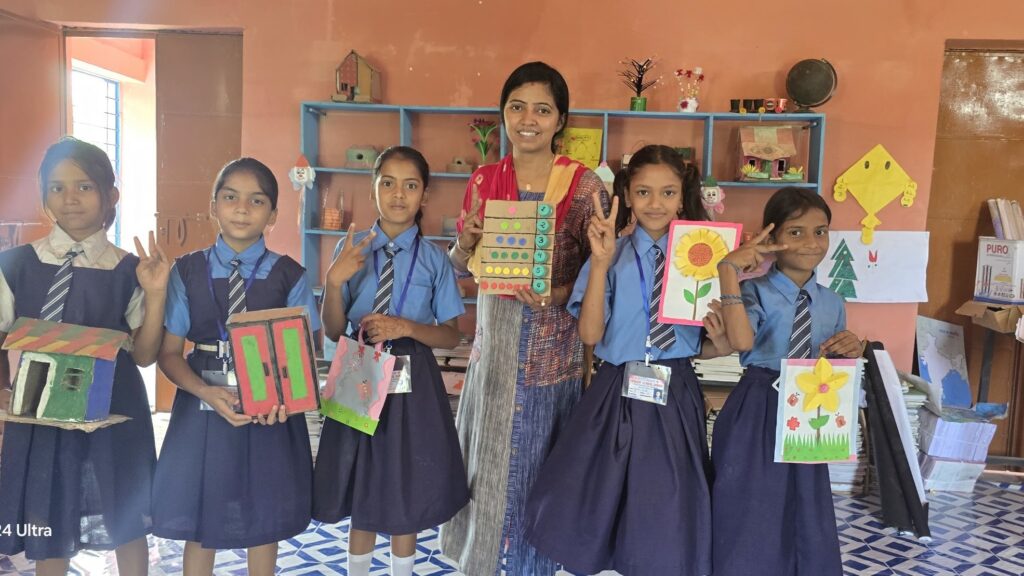
Look at what Nidhi has built, and you keep finding the girl she once was. The first girl from her village to pass in the first division is now the teacher at the door, asking a family to let their daughter stay in school a little longer. The school under the bamboo now has walls. The girls who might have been married off are in class, and some of them are writing books.
“I have come here along village paths where the road to education was not easy for girls,” she says. “I want the daughters who come after me not to have to struggle for their education as hard as I did.”


 Link copied to clipboard!